Skip to content

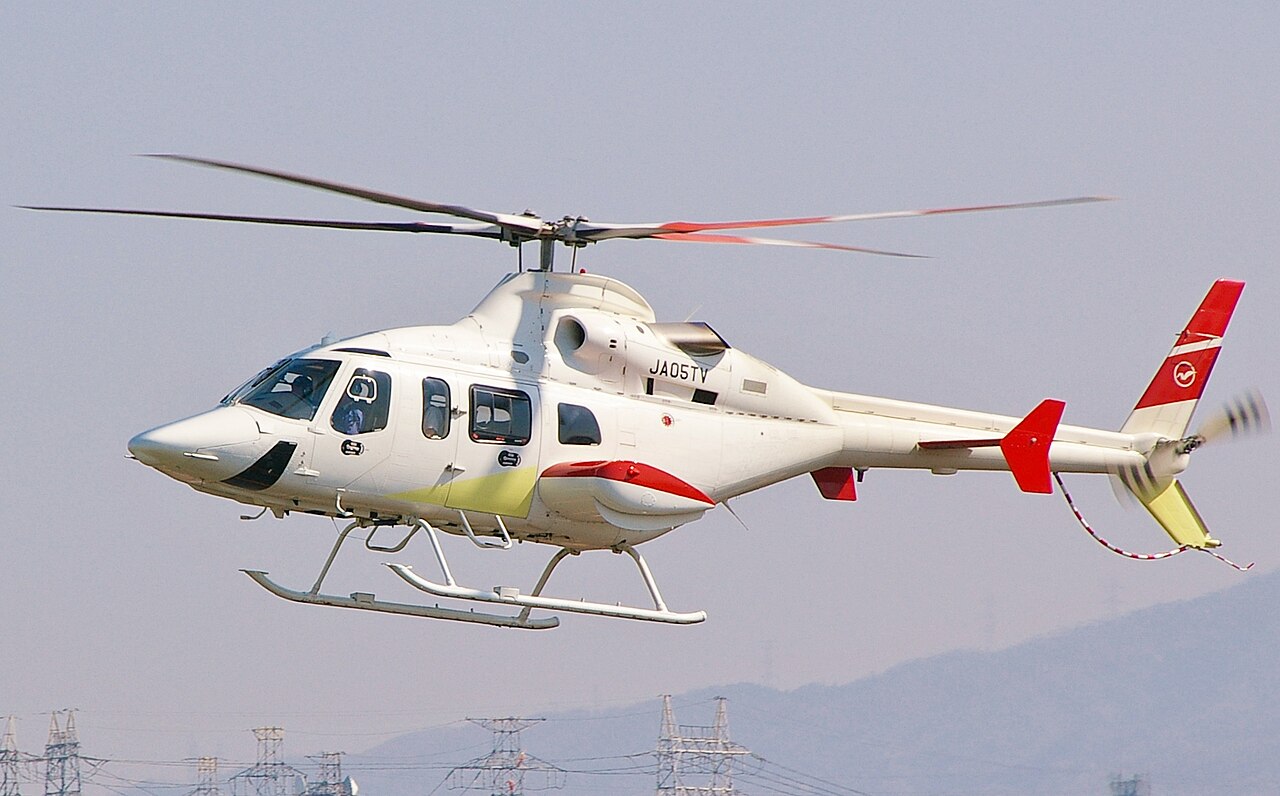
The Bell 430 is a medium turbine helicopter produced between 1996 and 2007. Price: the Bell 430 is out of production and, used, the market median is around US$ 1.9M. Median from Jet Tracker's price research as of 06/2026. It has a range of 360 nm, a cruise speed of 138 kt (256 km/h), up to 8 passengers. In Brazil there are 3 active units in the RAB-ANAC, excluding cancelled registrations. There are 6 aircraft from this family for sale today, across 6 listings on the portals Jet Tracker tracks (global market, not Brazil only).

Source: RAB-ANAC (data as of 11/11/2026) and Jet Tracker catalog (spec sheet reviewed on 11/7/2026).

Acquisition price · pre-owned market
6 active listings (global)Jet Tracker curation · 7 sources · 6/4/2026
US$ 1.9MR$ 10.3M
market medianaging ≈ −3.0%/yr−47% vs Medium Turbine Helicopter median
Entry
US$ 1.4M
model year 1996
Best value
US$ 1.9M
model year 2003
Top of range
US$ 2.1M
model year 2008
Basis
Listings
real listings
Minimum
US$ 1.3M
R$ 7.1M
Median
US$ 1.9M
R$ 10.3M
Maximum
US$ 3.2M
R$ 17.8M
Depreciation curve by year of manufacture
CAGR +3.1%/yr·1996→2008
Market median by vintage (USD). Light-blue band = min/max range observed across real listings. Points without reliable public listings (n ≤ 1) use Bluebook/curve interpolation and are flagged as lower confidence.
5 of 6 points with reduced confidence (n ≤ 1 listing observed). The estimate for these years comes from Aircraft Bluebook / market-curve interpolation, not from direct listings.
Landed in Brazil

Index ≈ ×1.11 to ×1.39 on the aircraft value, already with ferry, ANAC nationalization, IPI and ICMS.

Through a qualified importer
US$ 1.4M – 3.8M
R$ 7.9M – 21.1M · Agreement 75/91 · IPI + ICMS ~7 to 12%
Direct import
US$ 1.6M – 4.4M
R$ 9.1M – 24.7M · IPI + full ICMS ~25 to 32%

Market estimate: value + ferry + ANAC nationalization + taxes, no legal review. II, PIS and COFINS are 0% for aircraft (NCM 88.02); IPI is 6.5% (3.25% for air taxi) until Dec 31, 2026; ~4% ICMS only through a qualified importer (Agreement 75/91).

Cost per flight hour
Operate · owned
US$ 1.8K/h
R$ 10.0K/h · Variable/h
Fixed/yr
US$ 331.5K
Total/h @ 200 hrs/yr
US$ 3.5K/h
Charter · 🌎 World
US$ 4.5K – 5.5K/h
R$ 25.0K – 30.6K/h
Charter · 🇧🇷 Brazil
US$ 3.0K – 4.1K/h
R$ 16.7K – 22.8K/h

Operate = direct cost/hour (fuel + maintenance + engine); excludes fixed costs (hangar, crew, insurance). World: hourly rate published by charter operators. Brazil: charter is quoted per leg, so the hourly figure is an estimate from route quotes.

How we read this price · 7 sources · researched 6/4/2026

Median and price range for pre-owned aircraft, compiled by Jet Tracker from asking prices in listings and the price guides in the sources below, checked on 6/4/2026. 4 of 6 model years have an observed listing. The rest are estimates from the market curve between model years and are flagged in the chart.

PTAX · R$ 5.5605 / US$ · 11/11/2026

Market estimates for guidance only, not a firm quote. Confirm the value with a broker/appraiser before any transaction.

Temporal identity

First flight
Oct 25, 1994
FAA cert.
Apr 11, 1996
ANAC cert.
—
Deliveries start
—
Units produced
136

Bell 430, medium twin-engine helicopter. Stretched version of the Bell 230, VIP market.

Detailed specs

Performance

Engines
2x Rolls-Royce M250-C40B turboshafts
Engine type
Twin-turbine 808 shp each
Max speed
150 kt
Endurance
4 h
Fuel
920 L
Fuel
188 gal
Main rotor blades
4
Rate of climb
2,050 ft/min
Service ceiling
16,000 ft
Hover ceiling (IGE)
13,800 ft
Hover ceiling (OGE)
9,700 ft
Main rotor diameter
12.8 m
Max operating altitude
14,600 ft

Cabin and comfort

Doors
2 front doors + 2 rear sliding doors
Optional air conditioning
Yes
Configuration
8-9 VIP seats (1 pilot + 1 copilot + 6-7 passengers) in executive seating
Typical configuration
Executive 6
Passengers (max)
8
Useful load
1,748 kg
Cabin volume
4.47 m³
Noise attenuation
VIP cabin, good acoustic attenuation by the standards of the era
Cabin volume
158 cu ft
Passengers (typical)
6
Baggage compartment
35 cu ft

Avionics and engines

FMS
Universal UNS-1 or Honeywell GNS-XLS
Cockpit
Bell-Rogerson glass cockpit or steam gauges + optional EFIS
Autopilot
Honeywell SPZ-7000 4-axis
Flight deck
Universal
Transponder
Garmin GTX 345 with ADS-B Out (retrofit)
IFR certified
IFR single-pilot certified from the factory

Operating costs

Data source
Conklin & de Decker Life Cycle Cost, 2003 Bell 430 (BJTonline used-jet review PDF): fuel $649.44/hr at $7.38/gal = 88 gph, variable $1,645.39/hr, fixed $374,098/yr, engine restoration $297.26/hr · Helivalue$ pre-owned market value ~$1.85M · aircraftcostcalculator.com Bell 430 operating cost page · Bell 430 spec sources confirming 88 gph cruise on 2x Rolls-Royce M250-C40B
Fuel burn
105 gal/h
List price (2024)
US$ 0
Last updated
2026
Rotor overhaul interval
2,500 h
Market price (low)
US$ 1,200,000
Engine overhaul interval
3,500 h
Market price (high)
US$ 3,500,000

External dimensions

Overall length
13.44 m
Wingspan
12.8 m
Height
3.72 m

Weights & fuel

Operating empty weight (OEW)
2,406 kg
Maximum takeoff weight (MTOW)
4,218 kg
Maximum payload
1,600 kg
Fuel capacity
920 L
Fuel capacity
1,647 lb

Cabin

Standard configuration
1 zone6 typical passengers · 8 maxExecutive 6 seats

Typical factory configuration (curated data). The drawing below is schematic and at approximate scale; the actual layout varies by interior and year.

Cabin to scale: cross-section and profile
1,45 m1,45 m
front cross-section · person = 1.75 m
2,51 m long
Length
2.51 m
Width
1.45 m
Height
1.45 m
Volume
4.47 m³
Baggage
—

History

  1. 1994First flight
  2. 1996FAA certification
  3. 1996 - Launched in 1996 as an evolution of the Bell 230/222

    Bell certified the 430 in February 1996, a direct evolution of the Bell 230 (which was derived from the Bell 222 of the 1970s). Main changes: fuselage stretched by 18 inches (45 cm) to accommodate 8-9 VIP PAX, a more powerful Allison 250-C40B engine and a 4-blade soft-in-plane rotor (the same technology as the Bell 407). Positioned as a direct competitor of the Sikorsky S-76 (already dominant in VIP twins) and the Agusta A109. More than 130 units produced in 11 years.

  4. 2007End of production
  5. 2009 - Replaced by the Bell 429 GlobalRanger in 2009

    Bell discontinued the 430 in 2007, replaced by the Bell 429 GlobalRanger in 2009 (program launched 2005, first delivery 2009). The Bell 429 is an entirely new design (not derived from the 222/230/430) with a PW207D1 engine, MTOW of 3,175 kg (lighter than the 430), 7 PAX, partial FBW and a modular cabin. The Bell 429 was a commercial success vs. the 430 (200+ 429 units in 5 years vs. 130 in 11 years for the 430). Active 430 aircraft today are a residual fleet of legacy operators.

    Bell Textron

Brazil Fleet

The Bell 430 is a medium twin-turbine helicopter, out of production. The up-to-date RAB-ANAC registration count is in the Brazil Fleet section of this page, and the breakdown by status (operational, registration-mark reservation, suspended) is in the model's Analytics.

According to the EASA type certificate data sheet (TCDS EASA.IM.R.114, issue of 16 Dec 2019), the 430 was certified by Canada's TCCA on 23 Feb 1996 (Category A), with a four-blade main rotor, a two-blade tail rotor, two 250-C40B engines and skid or optional wheeled landing gear.

The pre-owned median and open listings, kept up to date, are in the price card and the For sale now card of this page.

Reviewed on 26/10/2026. Every number carries its source (manufacturer, certification authority or trade publication, with date); live fleet and market figures are in this page's sections.

14 registrations in the RAB (all statuses)

Full analysis: listing, mark reservations, charts and change log in the ANAC Monitor.

Open Analytics

Lineage

Model with no documented lineage in the manufacturer's line.

Curiosities and highlights

Benefits

4-blade soft-in-plane rotor reduces vibration by 35%

The 430 inherits the 4-blade soft-in-plane rotor from the military OH-58D Kiowa Warrior program, a Bell patent that reduces vibration by 35% vs. a conventional 2-blade rotor. The VIP cabin became quieter and steadier, a decisive trait for executive passengers sensitive to discomfort. Combined with the stretched fuselage and acoustic insulation, the 430 offered a VIP experience comparable to the S-76 at a lower acquisition cost. Today vibration is still a highlight of the used fleet.

Factory IFR-certified twin-engine for corporate missions

The Bell 430 left the factory as a twin-engine, IFR single-pilot certified helicopter, enabling all-weather corporate executive missions, night IFR EMS missions and operation in FIRs (Flight Information Regions) with IFR minimums. The Honeywell SPZ-7000 4-axis autopilot avionics are corporate jet level. For customers who needed a twin VIP IFR helicopter without the price tag of an S-76 or A109, the 430 was a competitive proposition in the 1990s/2000s.

Limitations

Only 130 units produced, orphaned fleet after 2007

Bell discontinued the 430 in 2007 after only 130 units, a small fleet vs. competitors (S-76 with 800+ units). Textron support continues but OEM parts are expensive and slow (lead time 60-90 days). Few specialized MROs. The used market sits at USD 1.2M-3.5M depending on hours and configuration, a theoretical bargain vs. the S-76 (USD 2-4M used), but with the trade-off of low resale liquidity. Operating in an emerging market (Brazil, Latam) is challenging due to the lack of local MRO.

Catalogued accidents

Sources: NTSB, CENIPA, Aviation Safety Network

9/23/2012· BR· BELÉM
PR-YRG
Serious

Collision with obstacle on the ground

4/27/2007· BR· SÃO JOSÉ DOS CAMPOS
PT-YUL
Minor

System or component failure

Bell 430 for sale now

Listed aircraft with a page on Jet Tracker, from the lowest asking price up. Asking is not the closing price; portals and the reading date are on each page.

Registrations in Brazil

2 operational aircraft owned by companies in the ANAC registry (RAB). Each opens the profile with owner, operator, status and history.

PP-MDYPT-YUL

Frequently asked questions

How much does the Bell 430 cost?

The Bell 430 is out of production, so there is no factory price. On the used market the median is around US$ 1.9M, varying with year and flight hours; see real listings on this model's Market tab. Reference value as of 06/2026.

What is the range of the Bell 430?

The maximum range is 360 nm (360 NM · 667 km).

How fast is the Bell 430?

Cruise speed is 138 kt, equivalent to 256 km/h.

How many passengers does the Bell 430 seat?

The Bell 430 seats up to 8 passengers, crew not included.

How many Bell 430 are there in Brazil?

There are 3 active units in the RAB-ANAC (data as of 11/11/2026): operational, mark reservation or suspended, excluding cancelled registrations.

Who operates the Bell 430 in Brazil?

3 distinct operators operate 3 units of the Bell 430 in the RAB-ANAC: 3 in private operation (RBAC 91), concentrated in SP and SC (data as of 11/11/2026). Name, fleet and state of each operator are on this model's Analytics tab and in the operators directory.

How much does it cost to operate the Bell 430 per hour?

Jet Tracker estimate: about US$ 3,455 per flight hour at 200 h/year, of which US$ 1,797 per hour is variable cost (fuel, engine program, maintenance reserves) plus US$ 331,473 per year of fixed cost (crew, hangar, insurance), under Jet Tracker's default assumptions (Southeast Brazil, in-house crew, 200 h/year). Run your own scenario on this model's Costs tab.

What is the market for the Bell 430 like in Brazil?

The Bell 430 is a medium twin-turbine helicopter, out of production. The up-to-date RAB-ANAC registration count is in the Brazil Fleet section of this page, and the breakdown by status (operational, registration-mark reservation, suspended) is in the model's Analytics.