Skip to content

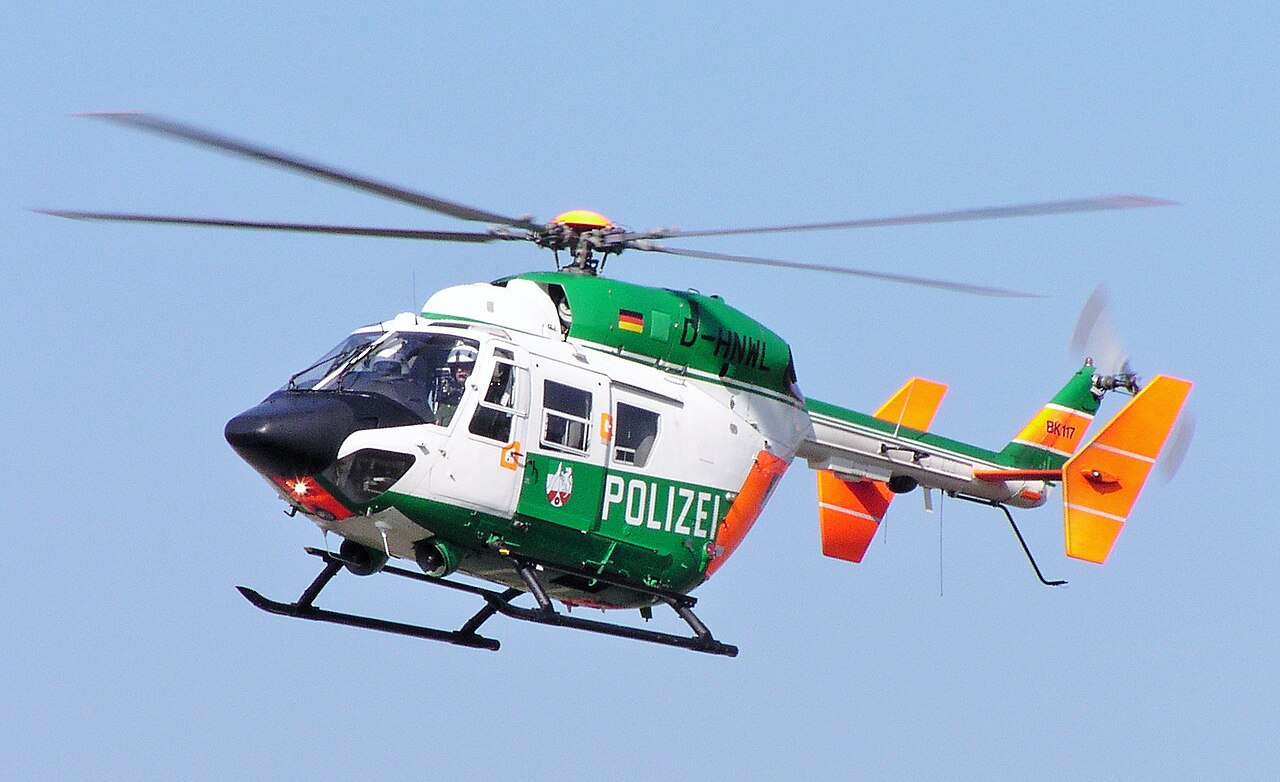
The MBB BK117 C-2 is a heavy turbine helicopter built from 2000, now out of production. Price: the MBB BK117 C-2 is out of production and, used, the market median is around US$ 3.0M. Median from Jet Tracker's price research as of 06/2026. It has a range of 370 nm, a cruise speed of 133 kt (246 km/h), up to 9 passengers. In Brazil there are 15 active units in the RAB-ANAC, excluding cancelled registrations. There is 1 aircraft from this family for sale today, across 1 listing on the portals Jet Tracker tracks (global market, not Brazil only).

Source: RAB-ANAC (data as of 11/11/2026) and Jet Tracker catalog (spec sheet reviewed on 11/7/2026).

Acquisition price · pre-owned market
limited data1 active listings (global)Jet Tracker curation · 8 sources · 6/4/2026
US$ 3.0MR$ 16.7M
market medianaging ≈ −7.4%/yr−56% vs Heavy Turbine Helicopter median
Entry
US$ 2.3M
model year 2002
Best value
US$ 2.7M
model year 2004
Top of range
US$ 5.8M
model year 2014
Basis
Valuation
Bluebook + market
Minimum
US$ 2.3M
R$ 12.8M
Median
US$ 3.0M
R$ 16.7M
Maximum
US$ 4.9M
R$ 27.2M
Depreciation curve by year of manufacture
CAGR +7.9%/yr·2002→2014
Market median by vintage (USD). Light-blue band = min/max range observed across real listings. Points without reliable public listings (n ≤ 1) use Bluebook/curve interpolation and are flagged as lower confidence.
4 of 4 points with reduced confidence (n ≤ 1 listing observed). The estimate for these years comes from Aircraft Bluebook / market-curve interpolation, not from direct listings.
Landed in Brazil

Index ≈ ×1.10 to ×1.36 on the aircraft value, already with ferry, ANAC nationalization, IPI and ICMS.

Through a qualified importer
US$ 2.5M – 5.7M
R$ 14.0M – 31.7M · Agreement 75/91 · IPI + ICMS ~7 to 12%
Direct import
US$ 2.9M – 6.7M
R$ 16.2M – 37.1M · IPI + full ICMS ~25 to 32%

Market estimate: value + ferry + ANAC nationalization + taxes, no legal review. II, PIS and COFINS are 0% for aircraft (NCM 88.02); IPI is 6.5% (3.25% for air taxi) until Dec 31, 2026; ~4% ICMS only through a qualified importer (Agreement 75/91).

Cost per flight hour
Operate · owned
US$ 1.7K/h
R$ 9.7K/h · Variable/h
Fixed/yr
US$ 452.0K
Total/h @ 200 hrs/yr
US$ 4.0K/h
Charter · 🌎 World
US$ 3.5K – 4.2K/h
R$ 19.2K – 23.4K/h
Charter · 🇧🇷 Brazil
US$ 2.7K – 4.3K/h
R$ 15.0K – 23.9K/h

Operate = direct cost/hour (fuel + maintenance + engine); excludes fixed costs (hangar, crew, insurance). World: hourly rate published by charter operators. Brazil: charter is quoted per leg, so the hourly figure is an estimate from route quotes.

How we read this price · 8 sources · researched 6/4/2026

Median and price range for pre-owned aircraft, compiled by Jet Tracker from asking prices in listings and the price guides in the sources below, checked on 6/4/2026. 2 of 4 model years have an observed listing. The rest are estimates from the market curve between model years and are flagged in the chart.

PTAX · R$ 5.5605 / US$ · 11/11/2026

Market estimates for guidance only, not a firm quote. Confirm the value with a broker/appraiser before any transaction.

Temporal identity

First flight
Jun 12, 1999
FAA cert.
—
ANAC cert.
—
Deliveries start
—
Units produced
—

The BK117 C-2 is the twin-engine helicopter Eurocopter sold as the EC145, certified in December 2000 and succeeded by the D-2 (H145) from 2014. It has a 3,585 kg maximum takeoff weight, a 133 kt maximum cruise speed and a 370 nm range, with two Turbomeca Arriel 1E2 engines. The classic BK117 (A, B and C-1, from 1982) and the H145 have their own pages. This page has the spec sheet, the market and the fleet of the model.

Detailed specs

Performance

Engines
2x Turbomeca Arriel 1E2 turboshafts
Engine type
Twin-turbine 700 shp each
Max speed
150 kt
Rotor system
Rigid rotor (hingeless), Bo 105 heritage
Endurance
3 h
Fuel
868 L
Fuel
229.2 gal
Main rotor blades
4
Rate of climb
2,008 ft/min
Service ceiling
17,200 ft
Hover ceiling (IGE)
11,000 ft
Hover ceiling (OGE)
6,500 ft
Main rotor diameter
11 m

Cabin and comfort

Doors
2 front doors + rear sliding doors + rear clamshell (EMS)
Optional air conditioning
Yes
Configuration
8-9 seats (1+1+6/7), reconfigurable EMS/VIP/utility cabin with rear clamshell door
Typical configuration
Crew 2 + Executive 8
Passengers (max)
9
Useful load
1,535 kg
Cabin volume
6 m³
Noise attenuation
Cabin up to the standard of its era, Fenestron in later variants
Passengers (typical)
8
Baggage compartment
46.7 cu ft

Avionics and engines

FMS
Honeywell GNS-XLS or Universal UNS-1Lw retrofit
Cockpit
Digital CPDS (VEMD and CAD on LCD) standard with conventional flight instruments; MEGHAS glass cockpit (FCDS with SMD 45 PFD/ND) optional
Autopilot
Honeywell SPZ-7600 4-axis optional
Transponder
Garmin GTX 345 with ADS-B Out (mandatory retrofit)
IFR certified
IFR single/dual-pilot certified from the factory
Weather radar
Honeywell Primus 660 optional

Operating costs

Data source
https://www.aircraftcostcalculator.com/AircraftOperatingCosts/461/Airbus-Eurocopter+EC+145 · https://www.aircraftcostcalculator.com/AircraftOperatingCosts/755/Eurocopter+EC145 · http://www.flugzeuginfo.net/acdata_php/acdata_ec145_en.php · https://www.bjtonline.com/aircraft/airbus-helicopters-ec145 · https://boltflight.com/airbus-h145-eurocopter-ec145-price-and-operating-costs/
Fuel burn
90 gal/h
Last updated
2026
Rotor overhaul interval
3,500 h
Market price (low)
US$ 850,000
Engine overhaul interval
3,500 h
Market price (high)
US$ 2,500,000

External dimensions

Overall length
13.03 m
Wingspan
11 m
Height
3.96 m

Weights & fuel

Operating empty weight (OEW)
1,792 kg
Maximum takeoff weight (MTOW)
3,585 kg
Fuel capacity
868 L
Fuel capacity
1,554 lb

Cabin

Standard configuration
1 zone8 typical passengers · 9 max2 crewExecutive 8 seats

Typical factory configuration (curated data). The drawing below is schematic and at approximate scale; the actual layout varies by interior and year.

Cabin to scale: cross-section and profile
1,28 m1,71 m
front cross-section · person = 1.75 m
2,26 m long
Length
2.26 m
Width
1.71 m
Height
1.28 m
Volume
6 m³
Baggage
—

History

  1. 1982 - MBB + Kawasaki joint venture, first German-Japanese helicopter

    In 1977, MBB (West Germany, ex-Messerschmitt) and Kawasaki Heavy Industries (Japan) signed a joint-venture agreement to develop a shared medium-twin, the only case of German-Japanese industrial cooperation in helicopters to this day. BK117 maiden flight in June 1979 (in Germany). JCAB (Japan) and LBA (Germany) certification in 1982. Production plants in Donauwörth (Germany, 70% of production) and Gifu (Japan, 30%, KHI Aerospace). More than 460 units produced in 25 years.

  2. 1999First flight
  3. 2004 - Replaced by the EC145 (1999) and later the H145 (2014)

    Eurocopter (which absorbed MBB in 1992) decided to modernize the BK117 platform, developing the EC145 launched in 1999 with a stretched cabin, more powerful Arriel 1E2/2E engine, Fenestron replacing the conventional tail rotor and modernized avionics. BK117 production ended in 2004; the EC145 entered continuous production. In 2014, with the unification of Airbus Helicopters, the EC145 became the H145. In 2020, the H145D3 version with a 5-blade rotor was certified, the fifth generation of the BK117 → EC145 → H145 → H145D3 lineage.

    Airbus Helicopters

Brazil Fleet

Lineage

Model with no documented lineage in the manufacturer's line.

Curiosities and highlights

Benefits

Rigid rotor inherited from the Bo 105, precise maneuvers

The BK117 inherited the fully rigid (hingeless) main rotor system of the MBB Bo 105, the world's first helicopter with a rigid rotor (1967). The feature allows precise maneuvers, responsive control and the ability to operate in marginal weather better than articulated rotors. Combined with a fuselage larger than the Bo 105 (cabin 8-9 PAX vs. 4-5 for the Bo 105), the BK117 entered niches where the Bo 105 was too small: premium EMS, governmental SAR, medium-lift utility.

Premium European/Japanese EMS standard between 1985-2005

The BK117 dominated premium European EMS for 2 decades; operators ADAC Luftrettung (Germany), Bundespolizei, Schweizerische Rettungsflugwacht REGA (Switzerland), KHI Air Rescue (Japan) standardized on the BK117 between 1985-2005. Decisive characteristics: twin-engine + IFR, flat-floor cabin with rear clamshell eases stretcher loading, rigid rotor allows precise maneuvers in alpine terrain. Gradually replaced by the EC145 (1999+) and H145 (2014+).

Limitations

LTS101 engine had a questionable reliability record

The Honeywell LTS101 engine that powers the early BK117 variants (A-series) had a history of reliability incidents, a failure rate higher than competing PT6 (Pratt & Whitney) and Arriel (Turbomeca) engines of the same era. Several ADs (Airworthiness Directives) were issued in the 90s/2000s mandating additional inspections and early overhauls. BK117 C-1/C-2 variants and the EC145 migrated to the more reliable Turbomeca Arriel 1E2. Historic LTS101 operators faced high maintenance costs.

Curiosities

Federal Police and Brazilian Navy historically operated the BK117

In Brazil, the Federal Police operates/operated the BK117 in tactical and SAR operations since the 90s. The Brazilian Navy operated UH-15 versions (Esquilo Bimotor) which are derivatives of the AS365 family, not the BK117 itself. The Brazilian civil BK117 fleet has always been small (< 20 units), but some state government fleets and some executive operations have used them. Helibras support (Itajubá MG) serves the Brazilian BK117 fleet.

Polícia Federal

Registrations in Brazil

9 operational aircraft owned by companies in the ANAC registry (RAB). Each opens the profile with owner, operator, status and history.

PP-BCSPR-EESPR-GCGPR-HZDPR-KPMPR-PPAPR-RJGPS-DETPS-MKT

Frequently asked questions

How much does the MBB BK117 C-2 cost?

The MBB BK117 C-2 is out of production, so there is no factory price. On the used market the median is around US$ 3.0M, varying with year and flight hours; see real listings on this model's Market tab. Reference value as of 06/2026.

What is the range of the MBB BK117 C-2?

The maximum range is 370 nm (370 NM · 685 km).

How fast is the MBB BK117 C-2?

Cruise speed is 133 kt, equivalent to 246 km/h.

How many passengers does the MBB BK117 C-2 seat?

The MBB BK117 C-2 seats up to 9 passengers, crew not included.

How many MBB BK117 C-2 are there in Brazil?

There are 15 active units in the RAB-ANAC (data as of 11/11/2026): operational, mark reservation or suspended, excluding cancelled registrations.

Who operates the MBB BK117 C-2 in Brazil?

11 distinct operators operate 13 units of the MBB BK117 C-2 in the RAB-ANAC: 13 in private operation (RBAC 91), concentrated in SP, CE and MG (data as of 11/11/2026). Not included in that count: 2 units run by public bodies (police, fire departments or government). Name, fleet and state of each operator are on this model's Analytics tab and in the operators directory.

How much does it cost to operate the MBB BK117 C-2 per hour?

Jet Tracker estimate: about US$ 4,004 per flight hour at 200 h/year, of which US$ 1,744 per hour is variable cost (fuel, engine program, maintenance reserves) plus US$ 452,000 per year of fixed cost (crew, hangar, insurance), under Jet Tracker's default assumptions (Southeast Brazil, in-house crew, 200 h/year). Run your own scenario on this model's Costs tab.