Skip to content

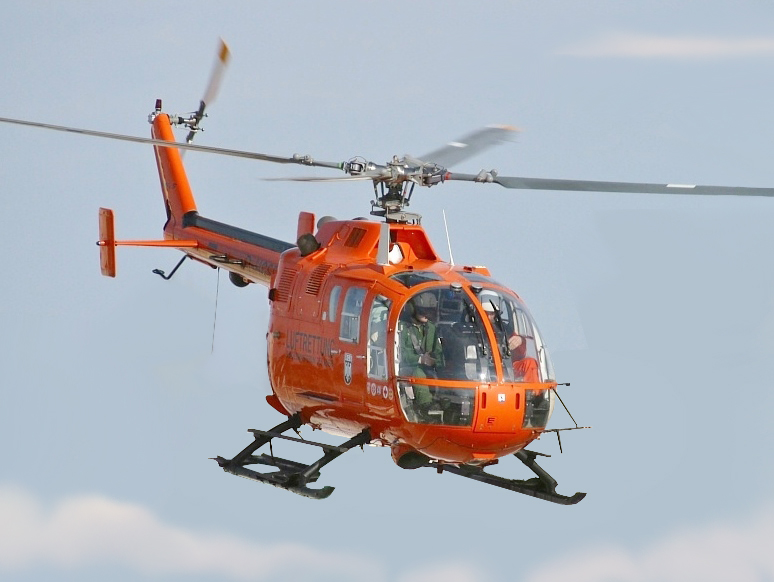
The MBB BO 105 is a light turbine helicopter produced between 1967 and 2001. Price: the MBB BO 105 is out of production and, used, the market median is around US$ 600,000. Median from Jet Tracker's price research as of 06/2026. It has a range of 310 nm, a cruise speed of 130 kt (241 km/h), 5 seats (pilot included). There are 9 aircraft from this family for sale today, across 9 listings on the portals Jet Tracker tracks (global market, not Brazil only).

Source: RAB-ANAC (data as of 11/9/2026) and Jet Tracker catalog (spec sheet reviewed on 10/9/2026).

Acquisition price · pre-owned market
limited data9 active listings (global)Jet Tracker curation · 7 sources · 6/4/2026
US$ 600.0KR$ 3.3M
market medianaging ≈ −5.1%/yr−58% vs Light Turbine Helicopter median
Entry
US$ 275.0K
model year 1976
Best value
US$ 600.0K
model year 1985
Top of range
US$ 675.0K
model year 1989
Basis
Listings
real listings
Minimum
US$ 200.0K
R$ 1.1M
Median
US$ 600.0K
R$ 3.3M
Maximum
US$ 800.0K
R$ 4.4M
Depreciation curve by year of manufacture
CAGR +5.4%/yr·1976→1993
Market median by vintage (USD). Light-blue band = min/max range observed across real listings. Points without reliable public listings (n ≤ 1) use Bluebook/curve interpolation and are flagged as lower confidence.
4 of 5 points with reduced confidence (n ≤ 1 listing observed). The estimate for these years comes from Aircraft Bluebook / market-curve interpolation, not from direct listings.
Landed in Brazil

Index ≈ ×1.32 to ×1.60 on the aircraft value, already with ferry, ANAC nationalization, IPI and ICMS.

Through a qualified importer
US$ 264.8K – 1.1M
R$ 1.5M – 6.2M · Agreement 75/91 · IPI + ICMS ~7 to 12%
Direct import
US$ 299.0K – 1.3M
R$ 1.6M – 7.1M · IPI + full ICMS ~25 to 32%

Market estimate: value + ferry + ANAC nationalization + taxes, no legal review. II, PIS and COFINS are 0% for aircraft (NCM 88.02); IPI is 6.5% (3.25% for air taxi) until Dec 31, 2026; ~4% ICMS only through a qualified importer (Agreement 75/91).

Cost per flight hour
Operate · owned
US$ 1.8K/h
R$ 10.0K/h · Variable/h
Fixed/yr
US$ 191.0K
Total/h @ 200 hrs/yr
US$ 2.8K/h
Charter · 🌎 World
US$ 1.7K – 2.0K/h
R$ 9.4K – 11.0K/h
Charter · 🇧🇷 Brazil
US$ 2.6K – 4.1K/h
R$ 14.3K – 22.6K/h

Operate = direct cost/hour (fuel + maintenance + engine); excludes fixed costs (hangar, crew, insurance). World: hourly rate published by charter operators. Brazil: charter is quoted per leg, so the hourly figure is an estimate from route quotes.

How we read this price · 7 sources · researched 6/4/2026

Median and price range for pre-owned aircraft, compiled by Jet Tracker from asking prices in listings and the price guides in the sources below, checked on 6/4/2026. 4 of 5 model years have an observed listing. The rest are estimates from the market curve between model years and are flagged in the chart.

PTAX · R$ 5.5127 / US$ · 11/09/2026

Market estimates for guidance only, not a firm quote. Confirm the value with a broker/appraiser before any transaction.

Temporal identity

First flight
Feb 16, 1967
FAA cert.
—
ANAC cert.
—
Deliveries start
—
Units produced
1,406

MBB BO 105, German light twin. Pioneering rigid rotor, aerobatic maneuvers.

Detailed specs

Performance

Engines
2x Allison 250-C20B turboshafts
Engine type
Twin-turbine 420 shp each
Max speed
145 kt
Rotor system
Rigid rotor (hingeless), titanium + carbon fiber
Endurance
3 h
Fuel
580 L
Fuel
150 gal
Main rotor blades
4
Rate of climb
1,770 ft/min
Service ceiling
17,000 ft
Hover ceiling (IGE)
9,450 ft
Hover ceiling (OGE)
5,800 ft
Main rotor diameter
9.84 m
Max operating altitude
17,000 ft

Cabin and comfort

Doors
2 front doors + 2 large rear clamshell doors
Seats
5
Optional air conditioning
Yes
Configuration
4-5 seats (1 pilot + 1 copilot + 2-3 rear), large rear clamshell door
Typical configuration
Vip 4
Useful load
1,224 kg
Noise attenuation
Small cabin, ANR essential
Baggage compartment
Reconfigurable rear cabin (clamshell door)
Total baggage volume
44 cu ft

Avionics and engines

Cockpit
Analog steam gauges (1980s), Garmin G500H retrofits common
Autopilot
Optional 2-axis autopilot
Transponder
Garmin GTX 345 with ADS-B Out (mandatory retrofit)
GPS (retrofit)
Garmin GTN 750/650, GNS 530W common
Weather radar
Not available

Operating costs

Data source
https://www.aircraftcostcalculator.com/AircraftOperatingCosts/448/Eurocopter+BO105CBS · https://conklindedecker.jetsupport.com/details/Airbus%20Helicopters%20BO%20105CBS · https://boltflight.com/mbb-bo-105-price-and-operating-costs/ · https://en.wikipedia.org/wiki/Allison_Model_250 · https://www.pprune.org/rotorheads/565460-c20b-overhaul-costs.html
Fuel burn
78 gal/h
List price (2024)
US$ 0
Last updated
2026
Rotor overhaul interval
2,400 h
Market price (low)
US$ 350,000
Engine overhaul interval
3,500 h
Market price (high)
US$ 1,100,000

External dimensions

Overall length
11.86 m
Wingspan
9.84 m
Height
3 m

Weights & fuel

Operating empty weight (OEW)
1,276 kg
Maximum takeoff weight (MTOW)
2,500 kg
Fuel capacity
580 L
Fuel capacity
1,038 lb

Cabin

Standard configuration
1 zone5 typical seats (pilot included)VIP 4 seats

Typical factory configuration (curated data). The drawing below is schematic and at approximate scale; the actual layout varies by interior and year.

Length
—
Width
—
Height
—
Volume
—
Baggage
44 cu ft

History

  1. 1967First flight
  2. 1970 - World's first helicopter with a fully rigid rotor

    In 1967, MBB began developing the Bo 105, the first commercial helicopter with a fully rigid (hingeless) main rotor system, eliminating traditional flapping and dragging hinges. Forged titanium rotor head and fiberglass blades, revolutionary engineering for the time. Maiden flight on February 16, 1967 and German certification in 1970. Rigid rotor technology became the reference for the EC135 (1996) and generated global MBB patents.

  3. 2001 - Eurocopter discontinued it in 2001, replaced by the EC135/H135

    MBB was absorbed by Eurocopter in 1992 (Aérospatiale + DASA joint venture). The Bo 105 line stayed in production in Donauwörth until 2001, when the EC135 (certified 1996) matured and became the natural successor, the same light-twin rigid-rotor concept, but with a roomier and quieter cabin. More than 1,500 Bo 105s produced in 30 years. The active fleet in 2024 still exceeds 400 units globally, with Airbus support guaranteed.

    Airbus Helicopters
  4. 2001End of production

Lineage

Model with no documented lineage in the manufacturer's line.

Curiosities and highlights

Benefits

Unique aerobatic capability, the only helicopter certified for loops

Thanks to the rigid rotor and reinforced structure, the Bo 105 is the only commercial helicopter certified for full aerobatic maneuvers (loops, rolls, hammerheads). The 'Flying Bulls' flight team (Red Bull, Austria) operates Bo 105s at air shows worldwide demonstrating unique capabilities. A maneuver impossible for articulated-rotor helicopters (Bell, AS350, etc.) because of the risk of mast bumping. A rare structural characteristic that persists today in the Flying Bulls fleet.

European EMS standard between 1980-2010

The Bo 105 dominated the European EMS (Emergency Medical Services) segment for 3 decades: the large rear clamshell door made loading stretchers and medical equipment easier, twin-engine provided safety, hot/high performance was adequate and operating costs were acceptable. Operators such as ADAC (Germany), Bundeswehr/Luftrettung, Christophorus Flugrettung (Austria) standardized on the Bo 105. Gradually replaced by the EC135/H135 (1996+) and H145.

Limitations

Small, noisy cabin, a VIP comfort limitation

The Bo 105 cabin is compact (vol. ~3.2 m³) and has modest acoustic insulation, a noisy cabin by the standards of its design era (1960s). It does not support long-distance luxury VIP. For premium executive missions, operators migrated to the H145, AW109 or H135, larger, quieter and more luxurious cabins. The Bo 105 stays restricted to utility, EMS, military and short low-cost flights.

Curiosities

Brazilian fleet: FAB and the Navy's EsqdHA-1

The FAB (Brazilian Air Force) operated Bo 105s designated CB-105 (search-and-rescue version) between 1980-2014 in the Esquadrão Pelicano. The Brazilian Navy operates a UH-12/UH-13 version derived from the Bo 105 in small numbers. The São Paulo State Civil Police (DEIC) operated Bo 105s in the 90s before migrating to the AS350/H135. The civil Brazilian fleet was always small (< 30 units); the model never became a standard like the Esquilo.

FAB

Catalogued accidents

Sources: NTSB, CENIPA, Aviation Safety Network

11/27/2011· BR· CARAUARI
PR-MEW
Serious

Loss of component in flight

1/27/2006· BR· COARI
PT-HXK
Minor

Collision with obstacle on the ground

MBB BO 105 for sale now

Listed aircraft with a page on Jet Tracker, from the lowest asking price up. Asking is not the closing price; portals and the reading date are on each page.

Frequently asked questions

How much does the MBB BO 105 cost?

The MBB BO 105 is out of production, so there is no factory price. On the used market the median is around US$ 600,000, varying with year and flight hours; see real listings on this model's Market tab. Reference value as of 06/2026.

What is the range of the MBB BO 105?

The maximum range is 310 nm (310 NM · 574 km).

How fast is the MBB BO 105?

Cruise speed is 130 kt, equivalent to 241 km/h.

How many passengers does the MBB BO 105 seat?

The MBB BO 105 has 5 seats in total, counting the pilot seat: up to 4 passengers.

How much does it cost to operate the MBB BO 105 per hour?

Jet Tracker estimate: about US$ 2,771 per flight hour at 200 h/year, of which US$ 1,816 per hour is variable cost (fuel, engine program, maintenance reserves) plus US$ 191,000 per year of fixed cost (crew, hangar, insurance), under Jet Tracker's default assumptions (Southeast Brazil, in-house crew, 200 h/year). Run your own scenario on this model's Costs tab.