Skip to content

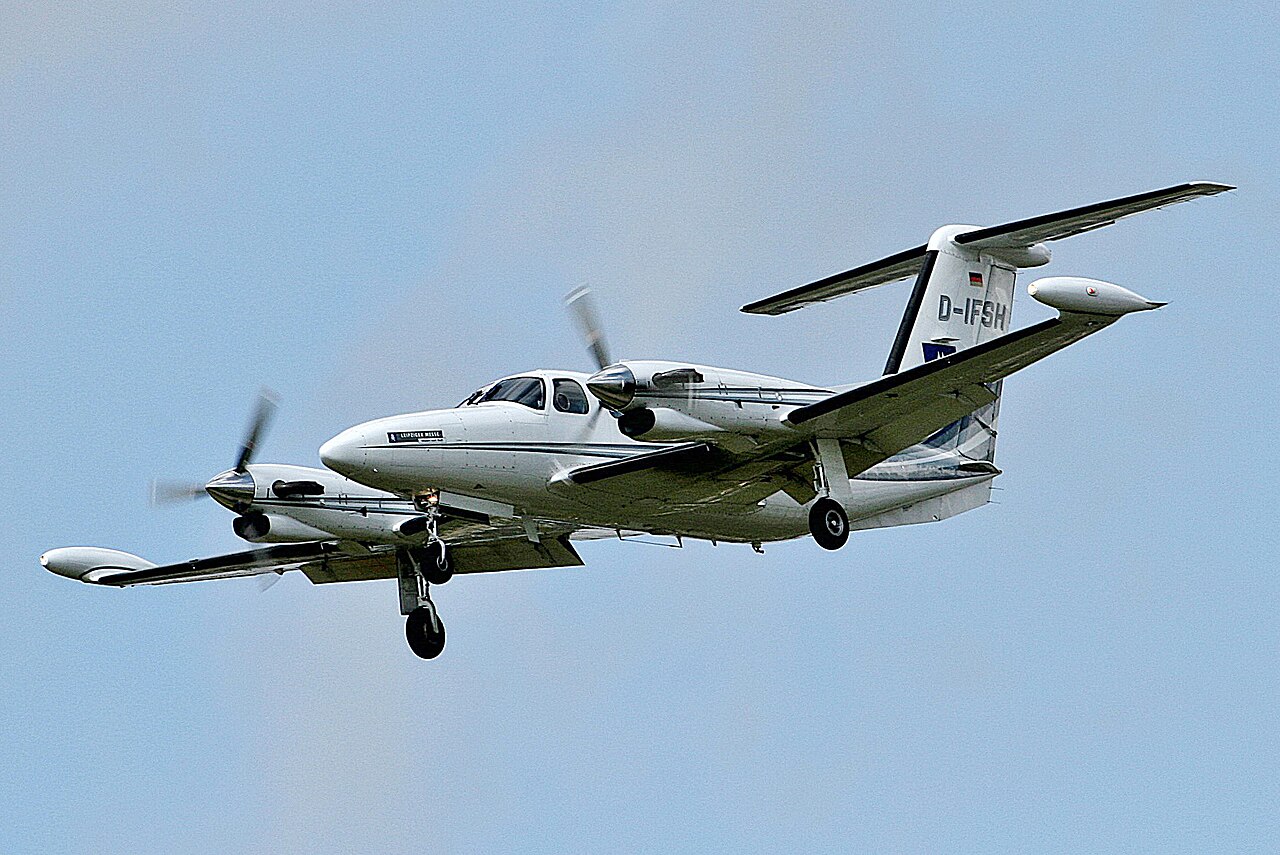
The Piper Cheyenne III PA-42 is a medium twin turboprop produced between 1979 and 1992. Price: the Piper Cheyenne III PA-42 is out of production and, used, the market median is around US$ 800,000. Median from Jet Tracker's price research as of 06/2026. It has a range of 2000 nm, a cruise speed of 300 kt (556 km/h), 11 seats (pilot included). There are 8 aircraft from this family for sale today, across 8 listings on the portals Jet Tracker tracks (global market, not Brazil only).

Source: RAB-ANAC (data as of 11/11/2026) and Jet Tracker catalog (spec sheet reviewed on 11/9/2026).

Acquisition price · pre-owned market
limited data8 active listings (global)Jet Tracker curation · 8 sources · 6/4/2026
US$ 800.0KR$ 4.4M
market medianaging ≈ −5.7%/yr−56% vs Turboprop Twin Medium median
Entry
US$ 680.0K
model year 1981
Best value
US$ 700.0K
model year 1982
Top of range
US$ 1.1M
model year 1990
Basis
Valuation
Bluebook + market
Minimum
US$ 400.0K
R$ 2.2M
Median
US$ 800.0K
R$ 4.4M
Maximum
US$ 1.5M
R$ 8.3M
Depreciation curve by year of manufacture
CAGR +6.0%/yr·1981→1990
Market median by vintage (USD). Light-blue band = min/max range observed across real listings. Points without reliable public listings (n ≤ 1) use Bluebook/curve interpolation and are flagged as lower confidence.
5 of 5 points with reduced confidence (n ≤ 1 listing observed). The estimate for these years comes from Aircraft Bluebook / market-curve interpolation, not from direct listings.
Landed in Brazil

Index ≈ ×1.20 to ×1.43 on the aircraft value, already with ferry, ANAC nationalization, IPI and ICMS.

Through a qualified importer
US$ 479.6K – 1.8M
R$ 2.7M – 10.3M · Agreement 75/91 · IPI + ICMS ~7 to 12%
Direct import
US$ 548.0K – 2.1M
R$ 3.0M – 11.9M · IPI + full ICMS ~25 to 32%

Market estimate: value + ferry + ANAC nationalization + taxes, no legal review. II, PIS and COFINS are 0% for aircraft (NCM 88.02); IPI is 6.5% (3.25% for air taxi) until Dec 31, 2026; ~4% ICMS only through a qualified importer (Agreement 75/91).

Cost per flight hour
Operate · owned
US$ 1.7K/h
R$ 9.7K/h · Variable/h
Fixed/yr
US$ 366.6K
Total/h @ 200 hrs/yr
US$ 3.6K/h
Charter · 🌎 World
US$ 1.5K – 1.9K/h
R$ 8.3K – 10.6K/h
Charter · 🇧🇷 Brazil
US$ 1.8K – 2.8K/h
R$ 10.0K – 15.6K/h

Operate = direct cost/hour (fuel + maintenance + engine); excludes fixed costs (hangar, crew, insurance). World: hourly rate published by charter operators. Brazil: charter is quoted per leg, so the hourly figure is an estimate from route quotes.

How we read this price · 8 sources · researched 6/4/2026

Median and price range for pre-owned aircraft, compiled by Jet Tracker from asking prices in listings and the price guides in the sources below, checked on 6/4/2026. 1 of 5 model years has an observed listing. The rest are estimates from the market curve between model years and are flagged in the chart.

PTAX · R$ 5.5605 / US$ · 11/11/2026

Market estimates for guidance only, not a firm quote. Confirm the value with a broker/appraiser before any transaction.

Temporal identity

First flight
May 18, 1979
FAA cert.
Dec 18, 1979
ANAC cert.
—
Deliveries start
Jun 30, 1980
Units produced
149

Piper PA-42 Cheyenne III (1979-1992), twin-engine executive turboprop, PT6A-41/61 engines, stretched fuselage vs. PA-31T. The IV version (Cheyenne 400LS) is the fastest in the family.

Detailed specs

Performance

Engines
2x Pratt & Whitney Canada PT6A-41 (III) or PT6A-61 (IIIA)
Maximum takeoff weight (MTOW)
11,200 lb
Ceiling
33,000 ft
Takeoff distance
2,522 ft
Max range
2,000 NM
Max cruise speed
300 kt
Useful load
4,520 lb
Fuel
593.9 gal
Rate of climb
2,380 ft/min
Landing distance
2,700 ft
Shaft horsepower per engine
720 shp

Cabin and comfort

Seats
11
Cabin width (alternate source)
1.42 m
Cabin height (alternate source)
1.4 m
Lavatory
Aft lavatory with solid door
Cabin length (alternate source)
5.18 m
Configuration
8-10 seats in club + divan layout, single-pilot or dual crew
Typical configuration
Club 4 + 2 Forward
Stand-up cabin
No
Cabin volume
8.1 m³
Differential pressurization
5.5 psi
Baggage capacity
60 cu ft

Avionics and engines

Avionics suite
Bendix-King EFIS-40 (original) or Collins APS-65 (IIIA)
Displays
EADI + EHSI dual
ADS-B Out
Common retrofit in active fleet
Autopilot
Collins APS-65 or Bendix-King KFC 300
Type rating
Does not require type rating (twin under 12,500 lb)
Weather radar
Bendix-King RDR-1300 or Collins WXR-300
Single-pilot certified
Yes

Operating costs

Data source
https://planephd.com/wizard/details/620/PIPER-PA-42-720-Cheyenne-III-specifications-performance-operating-cost-valuation · https://www.globalair.com/aircraft-specifications/piper/cheyenne-iii-pa-42-720-specifications/118 · https://www.aircraftcostcalculator.com/AircraftOperatingCosts/56/Piper+Cheyenne++III · https://www.avbuyer.com/articles/business-aviation-engines/pt6a-engine-what-s-it-worth-in-today-s-market-112271 · http://www.prattwhitney.com/en/services/pwc-engine-services/maintenance-repair-overhaul/pwcsmart/pt6a-engines
List price (new)
US$ 0
Fuel burn
75 gal/h
Last updated
2026
Engine overhaul cost
US$ 320,000
Market price (low)
US$ 350,000
Engine overhaul interval
3,600 h
Market price (high)
US$ 850,000

External dimensions

Overall length
13.23 m
Wingspan
14.53 m
Height
4.5 m
Wing area
27.2 m²
Wing sweep
0°

Weights & fuel

Operating empty weight (OEW)
3,101 kg
Maximum takeoff weight (MTOW)
5,080 kg
Maximum payload
1,021 kg
Fuel capacity
2,248 L
Fuel capacity
4,024 lb

Minimum runway

RBAC 135.399 · no factoring (≤ 5,670 kg, assumes normal category)sea level / ISA reference

How much runway the Cheyenne III PA-42 needs to dispatch: the manual figure and what the charter (RBAC 135) rule requires.

Charter (RBAC 135)
1,280m
no factoring · RBAC 135.399, assuming normal category; small transport-category aircraft are factored (135.397)
Takeoff or BFL, manual
1,280m
unfactored takeoff, manufacturer

No mandatory factoring: fits 283 of 465 Brazilian public runways.

Minimum runway

Where the Cheyenne III PA-42 dispatches under charter rules

Verdict per regime (private, charter dry and wet) across 465 Brazilian public runways, with the margin in meters.

Starter feature. Available on your Jet Tracker account.

Manufacturer-published distances at sea level, ISA and reference weight. Not corrected for altitude, temperature, wind or runway condition, takeoff included. Uses the declared LDA as a proxy for effective runway length (RBAC 135.361) and the most favourable threshold in calm air (135.385(b)(1)): on the day, wind may force the shorter threshold. Destination only: does not assess the alternate aerodrome (135.387). Not a substitute for the AFM or the operator's performance analysis. Rule: RBAC 135.385 and 135.398; private flying (RBAC 91) is not factored. Runways: declared distance (LDA) from AISWEB/DECEA (2026-09-05), checkable on each aerodrome chart; where DECEA publishes no declared distance, physical length from OurAirports is used.

Cabin

Standard configuration
1 zone6 typical seats (pilot included) · 11 maxClub 42 forward-facing

Typical factory configuration (curated data). The drawing below is schematic and at approximate scale; the actual layout varies by interior and year.

Cabin to scale: cross-section and profile
✗ no stand-up height
1,32 m1,27 m
front cross-section · person = 1.75 m
5,51 m long
Length
5.51 m
Width
1.27 m
Height
1.32 m
Volume
8.1 m³
Baggage
—

History

  1. 1979First flight
  2. 1979 - Piper's top-of-the-line turboprop launched in 1979

    The PA-42 Cheyenne III was announced in 1977 and had its first flight in May 1979, certified in 1980 as the flagship evolution of the Cheyenne I/II based on the PA-31T Navajo. Unlike its predecessors, it received an entirely new stretched fuselage, a new T-tail, a redesigned wing with integral tip tanks and more powerful PT6A-41 engines, positioning itself directly against the Beech King Air B200 (main rival) and the Cessna 441 Conquest II. About 149 III/IIIA units delivered through 1993.

  3. 1979FAA certification
  4. 1980First deliveries
  5. 1984 - 400LS variant took the line to Mach 0.55 with Garretts

    The top Piper Cheyenne 400LS variant (1984-1991) replaced the PT6As with Garrett TPE331-14s (1,000 SHP each) with Dowty Rotol reversible propellers and a limit speed of Mach 0.55 (~360 kt true), then the highest speed for a civil turboprop in production. About 44 400LS units were delivered, now rare and coveted by collectors and high-speed operators in the segment.

  6. 1992End of production

Brazil Fleet

The Piper Cheyenne III PA-42 is an 11-seat (pilot included) twin turboprop with a 2,000 nm range and a 300 kt cruise speed, built from 1979 to 1992. Jet Tracker's catalog currently links no RAB-ANAC registration to this model; that is why this page shows no Brazilian fleet.

Out of production, the model can only be bought pre-owned. The pre-owned median and open listings, kept up to date, are in the price card and the For sale now card of this page.

Reviewed on 26/10/2026. Every number carries its source (manufacturer, certification authority or trade publication, with date); live fleet and market figures are in this page's sections.

Lineage

Model with no documented lineage in the manufacturer's line.

Curiosities and highlights

Benefits

Speed superior to the contemporary King Air B200

At 300 kt real cruise, the Cheyenne III IIIA is faster than the King Air B200 (290 kt), which was its direct rival at the time, and nearly equals the Cessna 441 Conquest II (310 kt). The combination of T-tail, a more aerodynamic fuselage than the Navajo and PT6A-41/61 engines delivered then-unprecedented performance for a 'sub-12,500 lb' single-pilot capable turboprop.

Corporate-class cabin for 8-10 passengers

The stretched fuselage allows a typical club + divan layout of 8 seats with an enclosed rear lavatory and internal baggage accessible in flight, a rare configuration in turboprops under 12,500 lb. Pressurization of 6.3 psi and a ceiling of 33,000 ft deliver comfort comparable to midsize jets on long cruises. Acoustic panels and insulation improved drastically vs the Cheyenne I/II.

Limitations

Line discontinued in 1992 amid Piper's troubles

Piper Aircraft entered Chapter 11 in 1991 under New Piper Inc., and in 1992 discontinued the entire PA-42 line (Cheyenne III, IIIA and 400LS) to focus on pistons. Result: the support network for the Cheyenne III today is via PT6A-OEM (PWC Canada) and independent shops, with Piper-specific parts in growing scarcity. Current active fleet estimated at 100-130 operational units globally.

Curiosities

Used market between USD 350k and USD 850k

In 2024-2025 operational Cheyenne III/IIIA units trade between USD 350,000 (early years with PT6A-41) and USD 850,000 (IIIA with low-time PT6A-61, Garmin GTN 750/750Xi retrofitted avionics and ADS-B Out). It is one of the cheapest options for a pressurized twin turboprop with a cabin for 8 passengers, attracting private operators who reject the acquisition cost of King Airs.

Piper Cheyenne III PA-42 for sale now

Listed aircraft with a page on Jet Tracker, from the lowest asking price up. Asking is not the closing price; portals and the reading date are on each page.

Frequently asked questions

How much does the Piper Cheyenne III PA-42 cost?

The Piper Cheyenne III PA-42 is out of production, so there is no factory price. On the used market the median is around US$ 800,000, varying with year and flight hours; see real listings on this model's Market tab. Reference value as of 06/2026.

What is the range of the Piper Cheyenne III PA-42?

The maximum range is 2000 nm (2,000 NM · 3,704 km).

How fast is the Piper Cheyenne III PA-42?

Cruise speed is 300 kt, equivalent to 556 km/h.

How many passengers does the Piper Cheyenne III PA-42 seat?

The Piper Cheyenne III PA-42 has 11 seats in total, counting the pilot seat: up to 9 passengers.

How much does it cost to operate the Piper Cheyenne III PA-42 per hour?

Jet Tracker estimate: about US$ 3,579 per flight hour at 200 h/year, of which US$ 1,746 per hour is variable cost (fuel, engine program, maintenance reserves) plus US$ 366,600 per year of fixed cost (crew, hangar, insurance), under Jet Tracker's default assumptions (Southeast Brazil, in-house crew, 200 h/year). Run your own scenario on this model's Costs tab.

What is the market for the Piper Cheyenne III PA-42 like in Brazil?

The Piper Cheyenne III PA-42 is an 11-seat (pilot included) twin turboprop with a 2,000 nm range and a 300 kt cruise speed, built from 1979 to 1992. Jet Tracker's catalog currently links no RAB-ANAC registration to this model; that is why this page shows no Brazilian fleet.