Skip to content

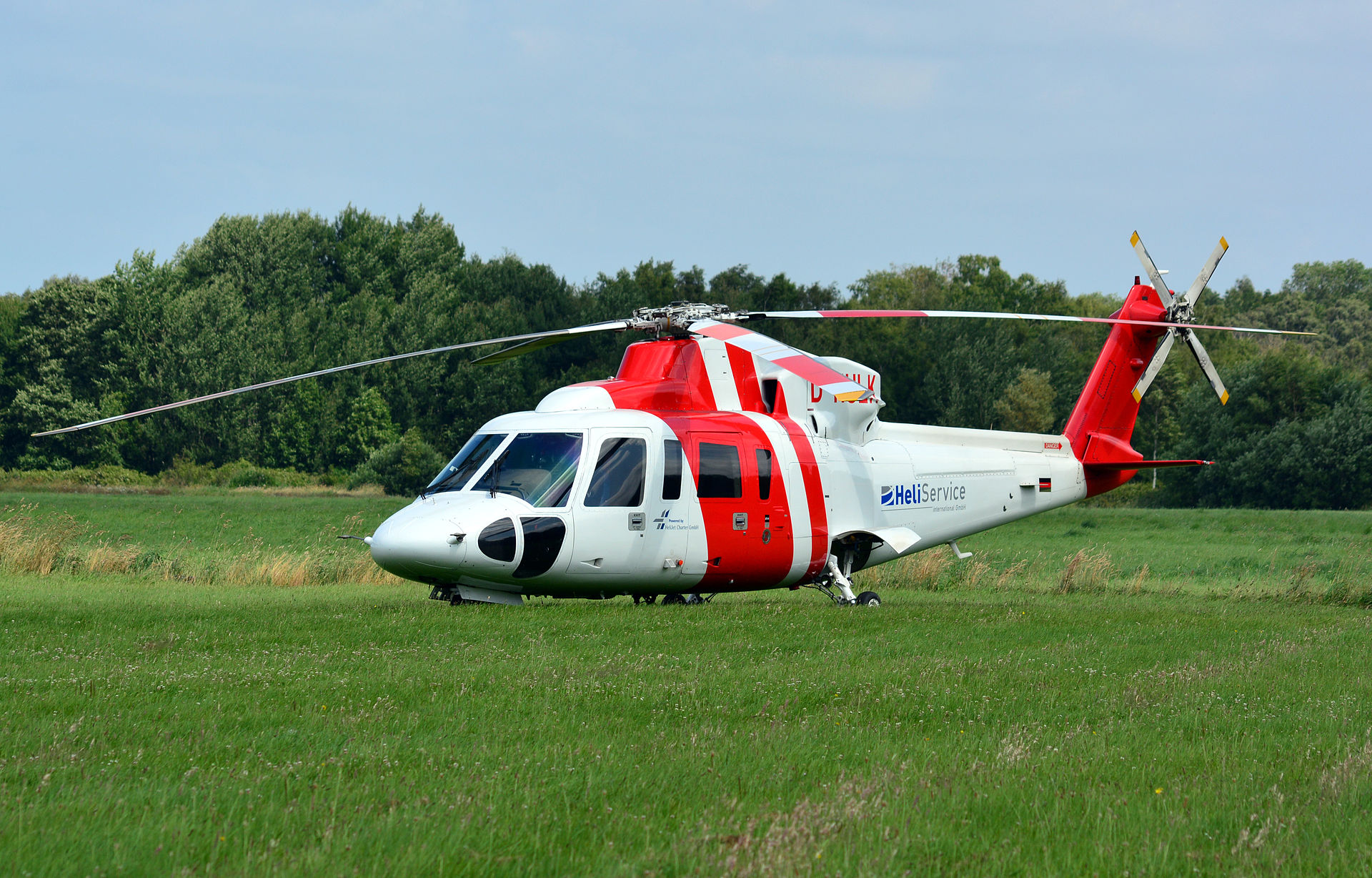
The Sikorsky S-76A is a heavy turbine helicopter produced between 1979 and 1991. Price: the Sikorsky S-76A is out of production and, used, the market median is around US$ 550,000. Median from Jet Tracker's price research as of 06/2026. It has a range of 411 nm, a cruise speed of 145 kt (269 km/h), up to 12 passengers.

Source: RAB-ANAC (data as of 11/13/2026) and Jet Tracker catalog (spec sheet reviewed on 10/26/2026).

Acquisition price · pre-owned market
limited dataJet Tracker curation · 5 sources · 6/4/2026
US$ 550.0KR$ 3.1M
market medianaging ≈ −8.0%/yr−92% vs Heavy Turbine Helicopter median
Entry
US$ 300.0K
model year 1979
Best value
US$ 520.0K
model year 1986
Top of range
US$ 750.0K
model year 1990
Basis
Valuation
Bluebook + market
Minimum
US$ 300.0K
R$ 1.7M
Median
US$ 550.0K
R$ 3.1M
Maximum
US$ 1.4M
R$ 7.9M
Depreciation curve by year of manufacture
CAGR +8.7%/yr·1979→1990
Market median by vintage (USD). Light-blue band = min/max range observed across real listings. Points without reliable public listings (n ≤ 1) use Bluebook/curve interpolation and are flagged as lower confidence.
4 of 4 points with reduced confidence (n ≤ 1 listing observed). The estimate for these years comes from Aircraft Bluebook / market-curve interpolation, not from direct listings.
Landed in Brazil

Index ≈ ×1.24 to ×1.48 on the aircraft value, already with ferry, ANAC nationalization, IPI and ICMS.

Through a qualified importer
US$ 372.2K – 1.8M
R$ 2.1M – 10.2M · Agreement 75/91 · IPI + ICMS ~7 to 12%
Direct import
US$ 423.5K – 2.1M
R$ 2.4M – 11.7M · IPI + full ICMS ~25 to 32%

Market estimate: value + ferry + ANAC nationalization + taxes, no legal review. II, PIS and COFINS are 0% for aircraft (NCM 88.02); IPI is 6.5% (3.25% for air taxi) until Dec 31, 2026; ~4% ICMS only through a qualified importer (Agreement 75/91).

Cost per flight hour
Operate · owned
US$ 2.0K/h
R$ 11.1K/h · Variable/h
Fixed/yr
US$ 395.4K
Total/h @ 200 hrs/yr
US$ 3.9K/h
Charter · 🌎 World
US$ 4.0K – 5.8K/h
R$ 22.7K – 32.8K/h
Charter · 🇧🇷 Brazil
US$ 2.8K – 4.3K/h
R$ 15.6K – 24.6K/h

Operate = direct cost/hour (fuel + maintenance + engine); excludes fixed costs (hangar, crew, insurance). World: hourly rate published by charter operators. Brazil: charter is quoted per leg, so the hourly figure is an estimate from route quotes.

How we read this price · 5 sources · researched 6/4/2026

Median and price range for pre-owned aircraft, compiled by Jet Tracker from asking prices in listings and the price guides in the sources below, checked on 6/4/2026. 2 of 4 model years have an observed listing. The rest are estimates from the market curve between model years and are flagged in the chart.

PTAX · R$ 5.6629 / US$ · 11/13/2026

Market estimates for guidance only, not a firm quote. Confirm the value with a broker/appraiser before any transaction.

Temporal identity

First flight
Mar 13, 1977
FAA cert.
Nov 21, 1978
ANAC cert.
—
Deliveries start
Feb 27, 1979
Units produced
284

Sikorsky S-76A (1979-1991), original version of the S-76, Allison 250-C30 engines. Replaced by the S-76B (1986+) and S-76C (1991+). Common in legacy offshore operations in Brazil.

Detailed specs

Performance

Engines
2x Allison (Rolls-Royce) 250-C30 turboshafts
Engine type
Twin-turbine 650 shp each (1,300 shp combined)
Max speed
155 kt
Endurance
3.5 h
Fuel
1,064 L
Fuel
281 gal
Main rotor blades
4
Rate of climb
1,350 ft/min
Service ceiling
13,800 ft
Hover ceiling (IGE)
5,400 ft
Hover ceiling (OGE)
3,600 ft
Main rotor diameter
13.41 m

Cabin and comfort

Doors
2 front doors + 2 large sliding rear doors (spacious cabin)
Optional air conditioning
Yes
Configuration
12-14 seats (1 pilot + 1 copilot + 10-12 passengers), VIP or utility
Typical configuration
Vip 6
Passengers (max)
12
Useful load
2,132 kg
Noise attenuation
VIP cabin, good insulation for the standard of the era, modern retrofits available
Passengers (typical)
6
Total baggage volume
38 cu ft
Baggage compartment
35 cu ft

Avionics and engines

FMS
Universal UNS-1 or Honeywell GNS-XLS (common retrofit)
Cockpit
Sperry/Honeywell SPZ-7000 4-tube EFIS, pioneer in civil twins
Autopilot
Sperry SPZ-7000 4-axis with coupled approach
Flight deck
Universal
Transponder
Garmin GTX 345 with ADS-B Out (retrofit)
IFR certified
IFR Cat I single-pilot, factory certified

Operating costs

Data source
https://www.aircraftcostcalculator.com/AircraftOperatingCosts/644/Sikorsky+S-76A · https://boltflight.com/sikorsky-s-76a-price-and-operating-costs/ · https://aircraftloancalculator.com/articles/the-true-operating-cost-of-sikorsky-s76.html · https://en.wikipedia.org/wiki/Sikorsky_S-76 · https://en.wikipedia.org/wiki/Allison_Model_250
Fuel burn
100 gal/h
List price (2024)
US$ 0
Last updated
2026
Rotor overhaul interval
2,500 h
Market price (low)
US$ 700,000
Engine overhaul interval
3,500 h
Market price (high)
US$ 2,000,000

External dimensions

Overall length
13.22 m
Wingspan
13.41 m
Height
4.42 m

Weights & fuel

Operating empty weight (OEW)
3,235 kg
Maximum takeoff weight (MTOW)
4,672 kg
Fuel capacity
1,064 L
Fuel capacity
1,905 lb

Cabin

Standard configuration
1 zone6 typical passengers · 12 maxVIP 6 seats

Typical factory configuration (curated data). The drawing below is schematic and at approximate scale; the actual layout varies by interior and year.

Cabin to scale: cross-section and profile
1,35 m1,93 m
front cross-section · person = 1.75 m
2,41 m long
Length
2.41 m
Width
1.93 m
Height
1.35 m
Volume
—
Baggage
38 cu ft

History

  1. 1977First flight
  2. 1978FAA certification
  3. 1979First deliveries
  4. 1979 - First civil Sikorsky designed from scratch

    The S-76A entered production in 1979 as Sikorsky's first helicopter designed from the start for the civil market, unlike the S-58 and S-61 (UH-34/SH-3), which were adapted military derivatives. Program launched in 1975 under the code name 'Spirit' for the US bicentennial (200th anniversary). FAA certification in November 1978, first commercial delivery in 1979. More than 280 S-76A units produced until 1991, when it was replaced by the S-76B (PT6B-36 engines).

  5. 1991End of production
  6. 2012 - Replaced by the S-76B (1985) and the S-76C/C+/C++ line up to the S-76D (2012)

    Sikorsky launched the S-76B in 1985 with more powerful PT6B-36 engines (960 shp each); S-76A production continued in parallel until 1991. Then came the S-76C (Turbomeca Arriel 1S1, 1991), S-76C+ (Arriel 2S1, 1996), S-76C++ (Arriel 2S2, 2005) and finally the S-76D in 2012 with PW210S engines and a Thales TopDeck glass cockpit. The complete S-76 family exceeds 875 units in 45 years, one of the most successful in civil history. The S-76D was the last version: Lockheed Martin (which acquired Sikorsky in 2015) announced the closure of the Coatesville plant in 2021, and in March 2022 Sikorsky ended the S-76D program.

Brazil Fleet

The Sikorsky S-76A is a twin-engine helicopter for up to 12 passengers with a 411 nm range and a 145 kt cruise speed, built from 1979 to 1991. Jet Tracker's catalog currently links no RAB-ANAC registration to this model; that is why this page shows no Brazilian fleet.

According to the EASA type certificate data sheet (TCDS EASA.IM.R.113, issue of 20 Jan 2020), the S-76A is the first model of the S-76 series, which includes the S-76B, S-76C and S-76D, and received its FAA type certificate on 21 Nov 1978. The data sheet describes four-blade main and tail rotors and tricycle landing gear, with two Allison 250-C30 (or 250-C30S) engines, a 4,763 kg maximum mass and seating for 12 passengers in the cabin and one in the cockpit. It requires two pilots for instrument flight; single-pilot instrument operation is approved when the helicopter is equipped for it.

Out of production, the model can only be bought pre-owned. The pre-owned median, kept up to date, is in the price card and the For sale now card of this page.

Reviewed on 26/10/2026. Every number carries its source (manufacturer, certification authority or trade publication, with date); live fleet and market figures are in this page's sections.

Lineage

Model with no documented lineage in the manufacturer's line.

Curiosities and highlights

Benefits

Advanced technology for its time, 4-blade rotor and pioneering EFIS

The S-76A brought a premium technology package for 1979: fully articulated 4-blade main rotor (vs. the 2-blade teetering rotor of the competing Bell 212), reducing vibration by 40% and improving passenger comfort; Sperry SPZ-7000 4-tube EFIS cockpit, the first electronic display in a production civil helicopter; dual-redundant hydraulic system; retractable landing gear reducing drag. Result: cruise of 145 KTAS (45% faster than the Bell 212) and an executive-class VIP cabin.

Global offshore workhorse of the 80s-90s

Together with the Bell 212/412, the S-76A was one of the global offshore workhorses in the 80s-90s; Petrobras, Shell, BP, Chevron and ConocoPhillips operated large fleets in the Gulf of Mexico, the North Sea, the Campos Basin and Southeast Asia. 12 PAX capacity, twin-engine PT6/Allison for safety, factory IFR Cat I and 411 nm range allowed reaching distant platforms. CHC, Bristow and PHI operated hundreds of units. The offshore S-76A fleet was gradually replaced by the S-76C+/C++ and then the AW139 from 2005.

Limitations

Low OGE hover ceiling in hot/high, a limitation of the Allison 250 engines

The Allison 250-C30 engines (650 shp each) deliver modest hot/high performance; an OGE hover ceiling of only 3,600 ft at ISA is weak for operations at altitude (e.g., the Andes, tropical Southeast Asia). Sikorsky addressed this in the S-76B variant (1985) with more powerful Pratt & Whitney PT6B-36 engines (960 shp), but the original S-76A fleet remained marked by the limitation. Today many S-76As have been converted via STC to Turbomeca Arriel 1S/1S1 engines to improve hot/high performance.

Curiosities

Kobe Bryant's fatal accident in an S-76B (2020) affected the model's image

The fatal accident of NBA star Kobe Bryant on January 26, 2020 occurred in a Sikorsky S-76B (a later variant than the S-76A, with PT6B-36 engines) in California, with loss of control due to spatial disorientation in IMC conditions with dense fog. The accident affected the commercial image of the entire S-76 family (including the S-76A) in the VIP market, with several American executives abandoning the model for fear of media attention. The NTSB pointed to the pilot's decision to continue under VFR into IMC, not helicopter failure.

Catalogued accidents

Sources: NTSB, CENIPA, Aviation Safety Network

8/7/2013· BR· MACAÉ
PT-YSM
Serious

Fire on the ground

2/5/2011· BR· RIO DE JANEIRO
PP-MBL
Minor

Fuel exhaustion

12/29/2008· BR· MACAÉ
PR-IME
Serious

In-flight fire

9/20/2007· BR· BELO HORIZONTE
PT-YAZ
Serious

System or component failure

Frequently asked questions

How much does the Sikorsky S-76A cost?

The Sikorsky S-76A is out of production, so there is no factory price. On the used market the median is around US$ 550,000, varying with year and flight hours; see real listings on this model's Market tab. Reference value as of 06/2026.

What is the range of the Sikorsky S-76A?

The maximum range is 411 nm (411 NM · 761 km).

How fast is the Sikorsky S-76A?

Cruise speed is 145 kt, equivalent to 269 km/h.

How many passengers does the Sikorsky S-76A seat?

The Sikorsky S-76A seats up to 12 passengers, crew not included.

How much does it cost to operate the Sikorsky S-76A per hour?

Jet Tracker estimate: about US$ 3,935 per flight hour at 200 h/year, of which US$ 1,958 per hour is variable cost (fuel, engine program, maintenance reserves) plus US$ 395,400 per year of fixed cost (crew, hangar, insurance), under Jet Tracker's default assumptions (Southeast Brazil, in-house crew, 200 h/year). Run your own scenario on this model's Costs tab.

What is the market for the Sikorsky S-76A like in Brazil?

The Sikorsky S-76A is a twin-engine helicopter for up to 12 passengers with a 411 nm range and a 145 kt cruise speed, built from 1979 to 1991. Jet Tracker's catalog currently links no RAB-ANAC registration to this model; that is why this page shows no Brazilian fleet.