Phenom 300: why the world's best-selling jet almost always reaches Brazil through bank leasing
Owner and operator are not always the same company in the RAB. Bank leasing explains why, and what that changes for anyone reading the registry.
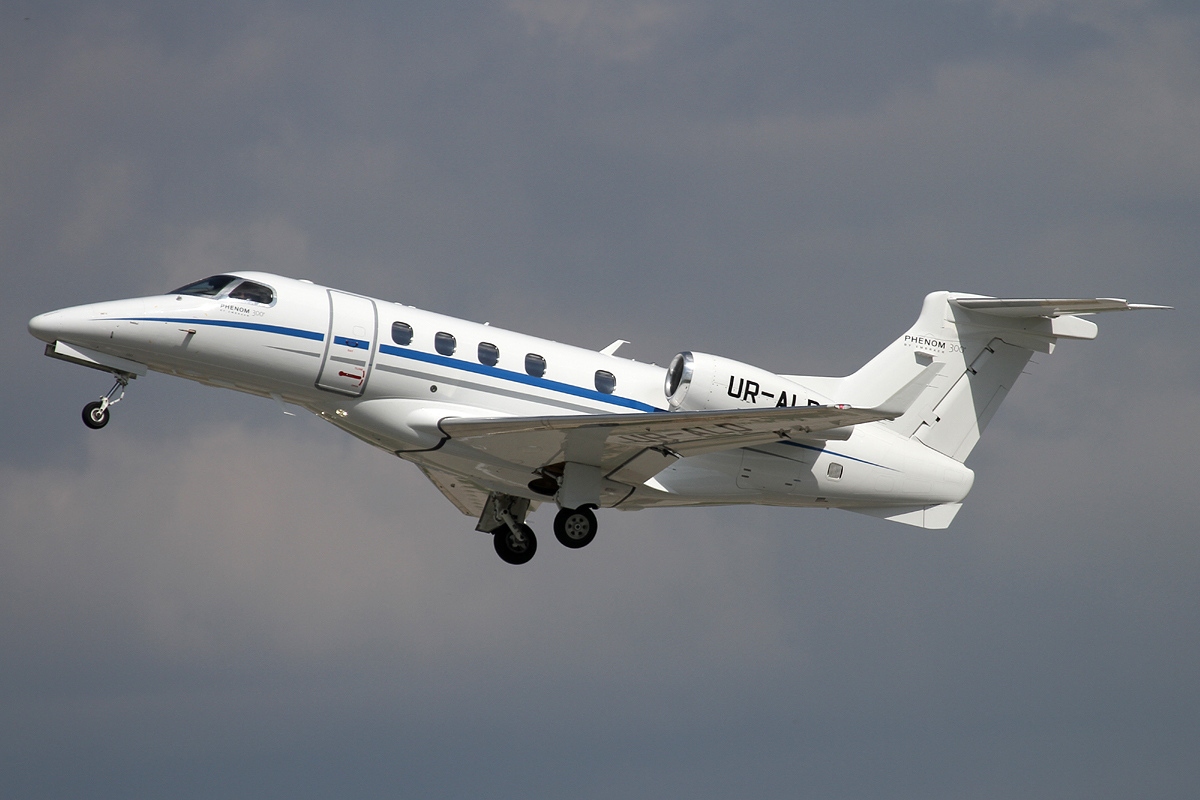
In recent weeks, more than one business aircraft has shown up in the news registered not in the name of whoever flies on it, but in the name of a financial institution. It is a different line in the RAB, Brazil's civil aircraft registry, with a different legal meaning: a financial lease, the bank leasing that finances a relevant share of the country's executive fleet without the buyer having to lay out the full factory price at once.
The Phenom 300 has been the best-selling business jet in the world for thirteen years running, according to the GAMA delivery reports cited by Embraer itself. In Brazil, it almost never arrives by the simplest route to imagine (the buyer pays outright and registers it in their own name). The most common route goes through a financing structure, and understanding that route is understanding how real money moves in Brazilian business aviation.
Thirteen years at the top of an entire category
Leading the deliveries of a category for a whole decade is not luck from a good year, it is product: the cabin and range of a light jet with an operating cost the market has historically accepted paying. The Phenom 300 factory price, looked at generation by generation, shows the other half of that story: the aircraft got more expensive at a much faster pace than the cost of flying it.
| Generation | Factory price | Direct cost per hour (estimated) |
|---|---|---|
| Phenom 300 (original) | $8.95M | $1,580 |
| Phenom 300E | $11M | $1,620 |
| Phenom 300EV (current) | $14M | $1,620 |
Source: Jet Tracker, factory specifications and operating cost database by model (aircraft_models), data from Jun 2026. The full breakdown of the price curve is in the article on the 56% increase between Phenom 300 generations.
An aircraft of almost $14 million in the current generation is not a working-capital purchase. That is exactly where the second half of the story comes in, the one that rarely appears in the news report about the aircraft itself: how that money leaves the pocket of whoever operates the aircraft.
The name that appears in the RAB is not always who flies
The RAB, kept by ANAC, Brazil's civil aviation authority, records two roles: owner and operator. In the Brazilian executive fleet, the naive reading assumes the two are the same company, from the same economic group as whoever boards the aircraft. In a good share of financed jets, they are not.
In a financial lease (the classic bank leasing), the financial institution buys the aircraft from the manufacturer and leases it, with a purchase option at the end of the contract, to the company that will actually operate it. In the RAB, that shows up as the owner being the financial institution and the operator being the group company that flies. Checking only the owner field, without looking at the operator, leads to a wrong reading of who is behind the aircraft. The RAB lookup guide details this difference field by field.
Why leasing, and not buying outright
Three reasons explain why the financial lease dominates business jet financing in Brazil, and none of them is a lack of cash on the buyer's side:
Capital preservation. A Phenom 300EV costs close to $14 million sitting on the factory ramp, before landed cost. Companies with capital-intensive operations prefer to keep that money working in the core business and pay for the aircraft in predictable installments, the same way they do with a vehicle fleet or heavy machinery.
Balance sheet structure. Depending on how the contract is designed, the lease changes the accounting and tax treatment of the asset compared with a direct purchase, which matters to finance departments that look at the aircraft as a balance sheet item, not just as a transportation tool.
Speed of delivery. The production queue for a jet like the Phenom 300 is long. When a specific unit becomes available (new or nearly new) and the buyer does not have all the capital ready at that moment, a financial institution can close the deal in weeks, while the company raising its own funds would take months.
A lease is not a lien, and neither one is a sale
It is worth separating two concepts that get confused in a quick read of the registry. The lien (such as a fiduciary lien) appears when the buyer themselves finances the purchase with a bank and gives the aircraft as collateral: the owner in the RAB is already the buyer, with only a transfer restriction until the debt is paid off. In a financial lease, on the other hand, the registered owner is the financial institution from the start, and only moves to whoever operated the aircraft if the purchase option is exercised at the end of the contract.
When a leased aircraft changes its registered owner (the financial institution transferring title to the operator at the end of the contract, for example), the RAB shows exactly that: an ownership movement. It is not a sale in the commercial sense of the word, it is the execution of a contractual clause agreed years earlier. Treating that change as a “sale” in coverage of the sector is the most common mistake of anyone who reads the registry without context.
Who uses this kind of structure
The pattern is not exclusive to one sector. It shows up in agribusiness companies that use the aircraft as a working tool between farm and capital, in industrial groups with a corporate fleet and in holding companies that prefer to isolate the aeronautical asset from the main operation. The common thread is the size of the check: the more expensive the model, the greater the chance that the owner registered in the RAB is a financial institution, not the company that actually uses the aircraft day to day.
The name in the RAB “owner” field answers who owns the paper. Who owns the aircraft, in the sense of who decides the route, is the operator, a different field, right next to it.
For anyone selling parts, insurance, hangar space or maintenance to this fleet, the difference is practical: the right commercial contact is the operator, not the financial institution. Cross-referencing the two fields by model is exactly the kind of reading that the Jet Tracker catalog and the analytics hub automate, instead of leaving that distinction hidden in a manual field-by-field lookup.
What this changes for someone who is buying
Anyone evaluating the purchase of a Phenom 300 or of any jet in the same price range gains from this distinction before signing anything. An aircraft whose registered owner is a financial institution usually has a lease contract in force, which changes the due diligence: it is not enough to check the lien and the Airworthiness Verification Certificate (CVA), you need to understand whether the aircraft is under an active lease and under what conditions the purchase option can be exercised. The full step-by-step of that audit, including the documents to ask for before closing a deal, is in the guide to buying an aircraft in Brazil.
For anyone bringing the aircraft in from outside the country (a common route when the right configuration does not exist in national inventory), lease financing enters the same math as the landed cost, with its own tax implications that fall outside the scope of this article and are detailed in what it costs to import an aircraft.
Get the radar every Friday
New listings, price drops and probable sales of the week, straight to your inbox. Free.
Did this article help? Like it and send it to whoever flies, buys or sells in this market.
Frequently asked questions
What is an aircraft financial lease?
It is bank leasing: a financial institution buys the aircraft and leases it, with a purchase option at the end of the contract, to the company that will actually operate it. In the RAB, the financial institution appears as the owner and the operating company appears in the operator field.
What is the difference between a lease and financing with a lien?
In financing with a lien (fiduciary lien), the buyer is already the registered owner in the RAB, with only a transfer restriction until the debt to the bank is paid off. In a financial lease, the registered owner is the financial institution from the start, and it only passes to the operator if the purchase option is exercised.
Is an ownership change on a leased aircraft a sale?
Not necessarily. When a financial institution transfers title to whoever operated the aircraft at the end of the lease, the RAB records an ownership movement, which is the execution of a clause agreed years earlier, not a sale in the commercial sense of the word.
Why do companies prefer leasing to buying the jet outright?
Three main reasons: preserving capital that would be tied up in the factory price, more favorable balance sheet and tax treatment in certain contract structures, and speed in closing the deal when a specific unit becomes available before the company's own funding is raised.
How do I find out who really operates an aircraft registered in the name of a financial institution?
The RAB separates owner and operator into distinct fields; the second usually indicates who actually uses the aircraft. To reach the economic group behind the operator's CNPJ, you need to cross-reference with the corporate ownership records of Receita Federal, Brazil's federal revenue service, a cross-reference that Jet Tracker automates by registration.
Sources
- ANAC, Brazil's civil aircraft registry (open data)
- Jet Tracker, factory specifications and operating cost database by model (aircraft_models), data from Jun 2026
- GAMA, General Aviation Manufacturers Association, delivery reports by manufacturer (figure cited by Embraer)
- Central Bank of Brazil, financial lease (leasing) regulation
- Receita Federal, CNPJ registry and corporate ownership records (public data)