How much is my airplane worth? How to find your aircraft's value
Start with market comparables and adjust for hours, engine program, history and avionics. For a first read, an online valuation is enough; when a bank, insurer or other party asks for a formal valuation, the path is an appraisal.
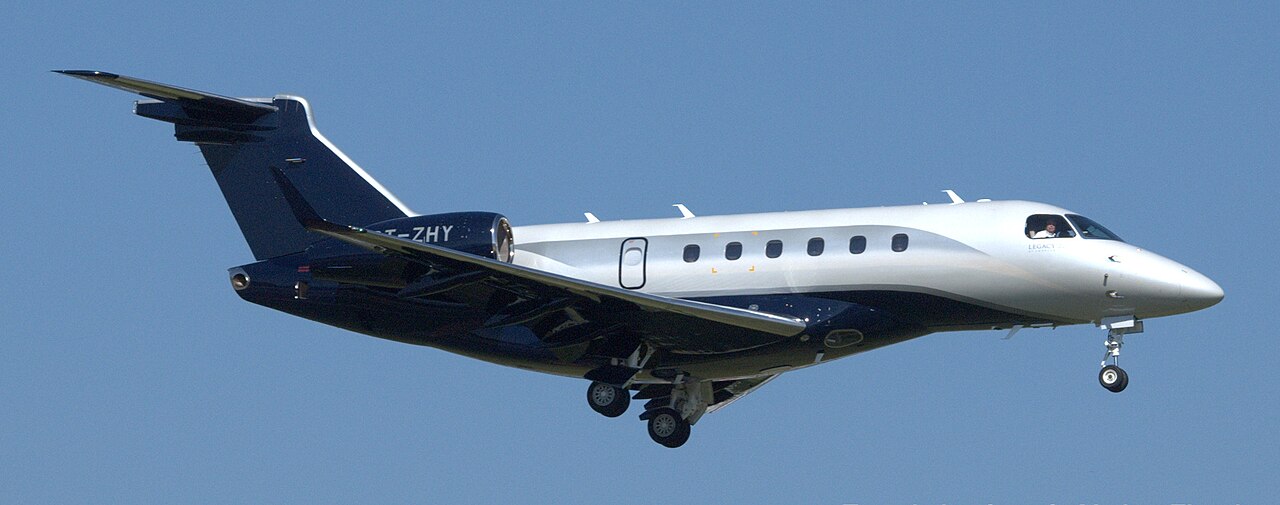
Every aircraft owner reaches this question sooner or later: to sell, to renew the insurance, to decide on a trade-up, or just to know where the assets stand. The answer is not a number from a table. It is a method, applied to one specific aircraft.
This guide covers the method: how you arrive at the value, what pushes it up or down, and when the case calls for a formal appraisal. If your interest is the tool, meaning how an online valuation works and what to expect from it, read online aircraft valuation.
The starting point is the market comparables method: cross-checking the asking prices of aircraft matching yours in model, year, hours and configuration. Reference tables give ranges, but the final value depends on total time, maintenance program, history, avionics and overall condition. For a first read, a well-fed online valuation is usually enough. To sell, buy or finance with third parties involved, an on-site appraisal is worth it.
What are the methods for finding an aircraft's value?
There are three professional valuation methods, used by certified appraisers (the American Society of Appraisers, ASA, which has a specialty in machinery and technical equipment that includes aircraft, and ISTAT, which certifies appraisers of transport aircraft, are accreditation references in the industry) and by banks that finance aircraft:
| Method | What it does | When to use it |
|---|---|---|
| Market comparables | Compares against aircraft of the same model and year listed or traded recently, adjusting for the differences | Direct purchase and sale, and setting the asking price |
| Cost | Calculates what it would cost to replace the aircraft with an equivalent new one, minus depreciation | Insurance and asset accounting |
| Income | Values the aircraft by its revenue potential (freight, air charter, leasing) | Commercial fleet aircraft |
In practice, the method that comes closest to the real price is comparables: look for identical or very similar aircraft for sale on portals such as Controller and AvBuyer or in Brazilian classifieds, and adjust the price for differences in year, hours and configuration. That is the logic an online valuation tool tries to automate. In Jet Tracker, the active listings are in the Sales Radar (aircraft for sale).
Do reference tables work for Brazil?
Publications such as the Aircraft Bluebook and the VRef Aircraft Value Reference are used by appraisers and banks to estimate ranges by model and year. They help, but they have limits in the Brazilian market:
- They do not capture the "Brazil cost": import, nationalization, more expensive maintenance and limited local supply all weigh on the prices actually paid here.
- They do not adjust for specifics such as registration in Brazil's civil aircraft registry (RAB), local maintenance history, or the configuration required to operate under instrument rules in Brazil.
Use the tables as a starting point, never as the final price. Jet Tracker does not currently have its own measurement of the gap between asking prices in Brazil and the US tables, so this guide cites no percentage. What you can do is look at the asking price in Brazil, model by model, in the market tabs of the catalog.
What affects my aircraft's value the most?
Price does not depend only on model and year. Two "identical" airplanes can differ quite a bit in price because of the factors below (a market reading, with no percentage measured by Jet Tracker):
- Total time. The fewer airframe and engine hours, the higher the value. Compare cycles (takeoffs and landings) too: an aircraft flown on short legs can have few hours and many cycles, which increases structural wear.
- Maintenance programs. Engines enrolled in engine programs such as ESP (Pratt & Whitney), MSP or JSSI tend to count in your favor at sale: JSSI, which sells this type of program, states that aircraft on an hourly maintenance program sell for a higher price than those without one (JSSI, Mar 2024). The program works as insurance per hour flown and takes the risk of a million-dollar major overhaul off the buyer. An aircraft off-program with an engine near TBO (the time between overhauls) loses a lot of value.
- Maintenance status. An aircraft that just came out of a major inspection is worth more than one whose next overhaul is coming due. Know how much time is left to the big events: hot section, major overhaul, landing gear.
- History and documentation. Complete logbooks, damage history (or the absence of it), few previous owners and traceable maintenance. Incomplete documentation creates uncertainty, and uncertainty pushes the price down. Regular registration in the RAB is the verifiable baseline in Brazil.
- Avionics and upgrades. An updated panel (for example, Garmin G1000 NXi or G5000) tends to add value; older avionics, without WAAS/LPV and ADS-B, tend to shrink the pool of buyers (a market reading, no measured number). A refreshed interior and paint count too.
- Model generation and popularity. Models with good liquidity, meaning a large fleet and many buyers, tend to sell faster and hold their price better than niche models (a market reading, not a rule).
What is each model worth? Asking prices in listings, October 2026
The numbers below are asking prices in public listings monitored by Jet Tracker, not sale prices or an official quote. Most listings do not publish a price, so the sample in each row is small and the reading is indicative. Use them as an order of magnitude.
| Model | Listings worldwide | With price | Median asking | Minimum to maximum |
|---|---|---|---|---|
| Phenom 300 | 26 | 6 | $9.2M | $4.8M to $10.5M |
| Phenom 300E | 44 | 7 | $13.9M | $11.995M to $15.5M |
| King Air 350 | 40 | 15 | $3.7M | $1.295M to $5.995M |
| Pilatus PC-12 NG | 67 | 18 | $4.72M | $2.995M to $6.5M |
| Robinson R66 | 118 | 48 | $1.41M | $650K to $1.92M |
Source: Jet Tracker, public listings monitored worldwide, queried Oct 11, 2026. The spread in each row mixes very different years and hours, which is exactly what the factors in the previous section explain.
Among listings in Brazil, the Phenom 300 had 16 aircraft listed and 4 with a price, with a median asking price of $10.0M. The Phenom 300E had 14 listed and 3 with a price, with a median of $14.0M. The King Air 350 had 12 listed and 3 with a price, with a median of $5.5M. All are small samples, indicative readings. Same source and same date.
For comparison with a factory-new aircraft: the Phenom 300E appears at $13.395M typically equipped (B&CA Purchase Planning Handbook Q1 2026, Aviation Week, Mar 2026), and the Robinson R66 lists at $1.456M (Robinson, price list of Jan 1, 2026, updated Jul 14). Other models have their own page in the catalog, with the market laid open: see the Phenom 300, the King Air 350 and the PC-12 NG.
As of Oct 12, 2026, the Jet Tracker monitor was tracking 11,966 active listings worldwide, adding Brazil and abroad. The medians above come from that base.
Why a range and not an exact price? Because the real price depends on the factors in the previous section. Two airplanes of the same model and the same year can land at opposite ends of the range, one because it has an engine program and a clean history, the other because it does not. The exact number only comes out with your aircraft's data.
How does an online valuation work, and is it reliable?
In broad terms, an online valuation follows three steps:
- You provide the data: model, year, airframe and engine hours, maintenance status, enrolled programs, avionics and configuration.
- The system cross-checks against its base: listing comparables (and, on some platforms, transactions), depreciation by age, and adjustments for the factors that move value.
- You receive an estimated range, not a guaranteed price.
It is reliable as a first read: it helps you decide whether it is worth selling now, to negotiate on firmer ground and to set the initial asking price. It does not replace an on-site inspection, because an online tool does not see an oil leak, corrosion, a worn interior or an incomplete logbook. Use the result as a starting point for negotiation, not as a verdict.
How the Jet Tracker tool works, what it uses and where it stops, is detailed in online aircraft valuation.
When do I need a professional appraisal instead of an online valuation?
Rule of thumb: the larger the value involved and the more outside parties take part, the more you need a formal appraisal.
| Situation | Is an online valuation enough? | And a professional appraisal? |
|---|---|---|
| Curiosity or a first read before selling | Yes | No |
| Setting the initial asking price | Yes, as a baseline | Advisable to confirm |
| Buying a used aircraft (pre-buy) | No, use it as a screen | Yes, with an on-site inspection |
| Bank financing | The bank decides | The bank may ask for one |
| Insurance (insured value) | The insurer decides | The insurer may ask for one |
| Estate, divorce, court dispute | Does not replace a formal appraisal, if one is requested | One of the parties or the court may ask for one |
| Donation or capital contribution to a company | Only as a reference | Advisable; confirm with an accountant or lawyer |
A professional appraisal involves a physical inspection of the aircraft, analysis of the logbooks and documented market research, with the appraiser's technical responsibility. It costs more and takes longer than an online valuation, but it is the document a bank, an insurer or a court may ask for when it wants a formal appraisal. The automatic estimate does not replace the appraisal in those cases, and whoever asked decides what to accept.
How do I add value to my aircraft before selling?
If the sale is coming in the next few months, a few steps tend to pay off in negotiation:
- Maintenance up to date, no open items. An expired or soon-to-expire inspection is the first discount the buyer asks for.
- Organized documentation. Complete logbooks, proof of maintenance program enrollment, ADs and SBs complied with. Sort it all out before you list.
- Honest photos and listing. Clean, well-photographed paint and interior help, and a listing with complete data (hours, programs, location) tends to generate more qualified inquiries.
- Active maintenance program. If the engine is near TBO, compare the cost of enrolling the aircraft in a program with the discount the buyer would apply.
- Realistic asking price. An aircraft priced well above the market tends to sit listed for months. Start from a well-calculated estimate and compare it with what is live in the Radar.
How do I find my aircraft's value right now?
The shortest path is to run an online valuation with the aircraft's real data and compare the result against active listings of similar airplanes. That alone puts you in a position to negotiate. If the next step is buying, selling or financing, validate with a professional appraisal before closing the deal.
To see what is listed for your model, the catalog has the market tab for each one. Anyone on the buying side will find the full roadmap in how to buy an airplane.
Did this article help? Like it and send it to whoever flies, buys or sells in this market.
Frequently asked questions
How much does it cost to value an aircraft?
Online valuations are usually free or low cost. A professional appraisal with an on-site inspection is quoted per project and varies with the size of the aircraft and the appraiser; there is no reliable public price list. Ask for a quote early, because an on-site appraisal takes longer than an online valuation.
Do reference-table prices (Bluebook or VRef) hold in Brazil?
As a starting reference, yes. As a final price, no: the Brazilian market has smaller supply and higher costs, so the price actually paid here can drift from the table, and Jet Tracker has not measured that gap. Always adjust with local comparables.
Do high hours reduce an aircraft's value a lot?
Yes, it is one of the heaviest factors, especially engine hours relative to TBO. But high hours with rigorous maintenance and active programs can be worth more than low hours with a doubtful history.
How much value does an aircraft lose when it is off a maintenance program?
There is no fixed number: it depends on the cost of the next major maintenance event. The discount usually reflects the estimated cost of the major overhaul or hot section the buyer will have to bear. That is why programs such as ESP and JSSI tend to weigh in the negotiation: JSSI, which sells this type of program, states that aircraft on an hourly maintenance program sell for a higher price than those without one (JSSI, Mar 2024).
Is it worth upgrading the avionics before selling?
It depends on the cost of the upgrade and the buyer profile. Modern avionics widen the pool of interested buyers, but the investment rarely comes back in full in the price. For a quick sale, prioritize up-to-date maintenance and organized documentation.
How do I know whether a listing's asking price is fair?
Compare it with listings of the same model and a similar year and hours band, adjust for the differences (programs, avionics, condition) and run an online valuation with the listing's data. If the price lands well outside the range, be suspicious, whether high or low.
Sources
- American Society of Appraisers (ASA)
- ISTAT
- Aircraft Bluebook and VRef Aircraft Value Reference
- B&CA Purchase Planning Handbook Q1 2026, Aviation Week, Mar 2026
- Robinson Helicopter, R66 NxG Southwood Price List (Jan 1, 2026, updated Jul 14)
- Controller and AvBuyer (classifieds, asking price)
- Jet Tracker, public listings monitored worldwide, queried Oct 11, 2026
- JSSI, how hourly maintenance programs work (Mar 2024)