Learjet 75Learjet 702013–2017
RangeMTOWCruiseCeiling
Key changes
Detailed variants pending.
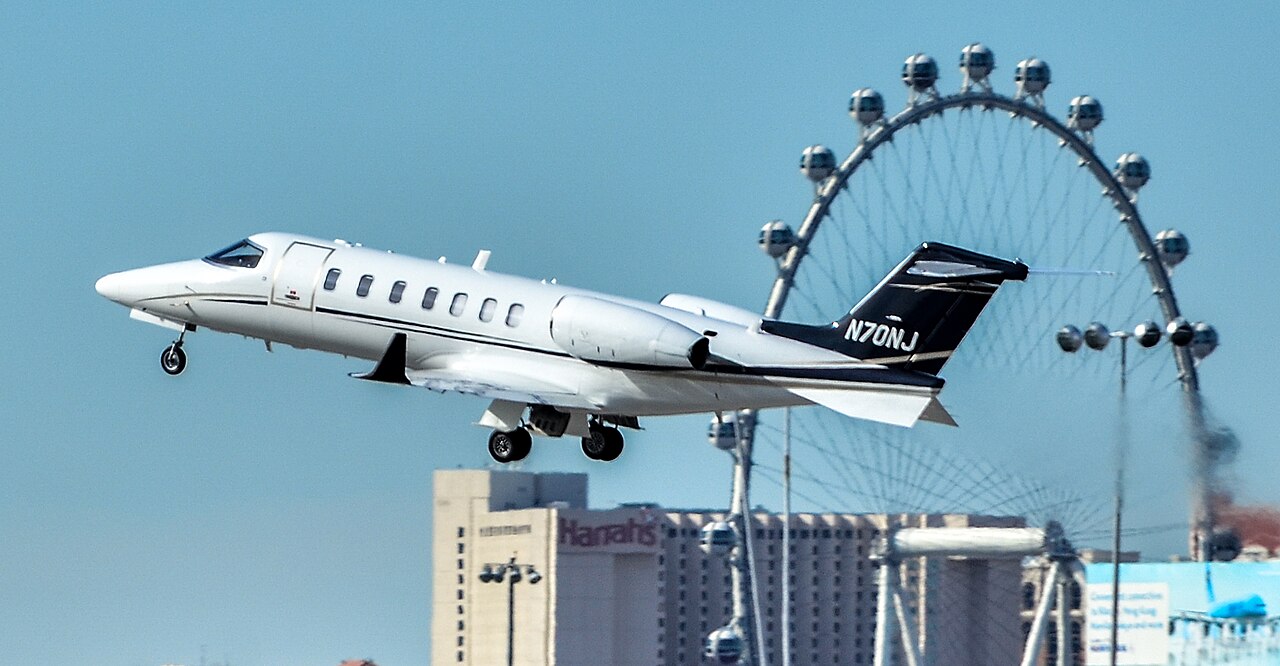
LJ70The Learjet 70 is a light jet produced between 2013 and 2017. Price: the Learjet 70 is out of production and, used, the market median is around US$ 4.4M. Median from Jet Tracker's price research as of 06/2026. It has a range of 2060 nm, a cruise speed of 464 kt (859 km/h), Mach 0.81, up to 7 passengers. In Brazil there is 1 active unit in the RAB-ANAC, excluding cancelled registrations. The Learjet 70 family (2 variants) totals 26 active units. There are 27 aircraft from this family for sale today, across 39 listings on the portals Jet Tracker tracks (global market, not Brazil only).
Source: RAB-ANAC (data as of 11/9/2026) and Jet Tracker catalog (spec sheet reviewed on 11/8/2026).
Index ≈ ×1.10 to ×1.35 on the aircraft value, already with ferry, ANAC nationalization, IPI and ICMS.
Market estimate: value + ferry + ANAC nationalization + taxes, no legal review. II, PIS and COFINS are 0% for aircraft (NCM 88.02); IPI is 6.5% (3.25% for air taxi) until Dec 31, 2026; ~4% ICMS only through a qualified importer (Agreement 75/91).
Operate = direct cost/hour (fuel + maintenance + engine); excludes fixed costs (hangar, crew, insurance). World: hourly rate published by charter operators. Brazil: charter is quoted per leg, so the hourly figure is an estimate from route quotes.
Median and price range for pre-owned aircraft, compiled by Jet Tracker from asking prices in listings and the price guides in the sources below, checked on 6/5/2026. 3 of 5 model years have an observed listing. The rest are estimates from the market curve between model years and are flagged in the chart.
PTAX · R$ 5.5127 / US$ · 11/09/2026
Market estimates for guidance only, not a firm quote. Confirm the value with a broker/appraiser before any transaction.
The Learjet 70 is a light business jet produced between 2013 and 2017, with winglets and a cabin for up to 7 seats (6 in typical configuration). It flies with a range of 2,060 nm, a cruise speed of 464 kt, and a service ceiling of 51,000 ft, with a maximum takeoff weight of 9,707 kg. This page includes the model's technical specifications, the estimated operating cost per flight hour, price references in the used market, and the fleet registered in Brazil, with operators and distribution by state.
How much runway the Learjet 70 needs to dispatch: the manual figure and what the charter (RBAC 135) rule requires.
Dispatches under charter rules at 245 of 465 Brazilian public runways when dry, and at 147 when wet.
Verdict per regime (private, charter dry and wet) across 465 Brazilian public runways, with the margin in meters.
Starter feature. Available on your Jet Tracker account.
Manufacturer-published distances at sea level, ISA and reference weight. Not corrected for altitude, temperature, wind or runway condition, takeoff included. Uses the declared LDA as a proxy for effective runway length (RBAC 135.361) and the most favourable threshold in calm air (135.385(b)(1)): on the day, wind may force the shorter threshold. Destination only: does not assess the alternate aerodrome (135.387). Not a substitute for the AFM or the operator's performance analysis. Rule: RBAC 135.385 and 135.398; private flying (RBAC 91) is not factored. Runways: declared distance (LDA) from AISWEB/DECEA (2026-09-05), checkable on each aerodrome chart; where DECEA publishes no declared distance, physical length from OurAirports is used.
Typical factory configuration (curated data). The drawing below is schematic and at approximate scale; the actual layout varies by interior and year.
Detailed variants pending.
Announced in 2012, the Lear 70 and Lear 75 were the first Lears equipped with Garmin G5000 avionics, 3 14-inch touchscreen displays with synthetic vision, integrated FliteCharts and GTC controllers. The choice of Garmin (instead of Honeywell or Collins) was unprecedented in the Lear line and followed the G5000's success on the King Air and Citation Latitude.
Announced by Bombardier at EBACE 2012 together with the Learjet 75. Certified by the FAA in November 2013. Garmin G5000 avionics and new winglets vs. the 40XR.
Bombardier delivered approximately 11 Lear 70s between 2013 and 2017, while the Lear 75 stayed in production until 2022. In February 2021, Bombardier made the definitive end of the Learjet brand official after 58 years; the Lear 70 is the second least-produced model in the brand's history, behind only the Lear 28/29 (5 units).
Bombardier discontinued the Learjet 70 in 2017 due to low demand, a small global fleet (estimated at ~10 units), well below the 75.
The G5000 offers synthetic vision technology, a 3D representation of terrain, obstacles and runway even in zero visibility. For operations at Brazilian airports with complex terrain (Confins, Vitória, Florianópolis), it significantly reduces the risk of CFIT (Controlled Flight Into Terrain) and improves situational awareness on RNP approaches.
The same LR-Lear-45 type rating covers the Lear 40, 45, 70 and 75; pilots certified on any of the four can operate the others with avionics differences training (8-16h). Practical for operators that mix legacy (45 XR) and modern (75) fleets with the same pilot crew.
Maximum speed of Mach 0.81, higher than the Phenom 300E (M 0.80) and Citation CJ4 (M 0.77) in the same light jet category.
The 1.50m cabin height does not allow stand-up, and the low production volume (only 11 units) makes the secondary market illiquid. Finding a Lear 70 for sale is rare and the average time to sell exceeds 12 months; operators prefer the Lear 75 (stretched, same avionics) or the Phenom 300E (larger cabin, newer).
In February 2021 Bombardier announced the end of Learjet production, closing the brand after 58 years and more than 3,000 units. The last delivery, a Learjet 75, was in March 2022, and factory support continues through the Wichita service center until 2030+. For buyers in 2026, the risk is the longevity of support and parts availability.
Cabin length of 5.39m (vs. 6.02m for the 75) seats 6 passengers instead of 8, a fuselage difference between the 70 and 75 models.
Structurally the Lear 70 is almost identical to the 40 XR: same short-body fuselage, same dimensions, same basic wing. The differences are G5000 avionics, -40BR engines (vs. -20AR) and optimized canted winglets. Internally some engineers called the 70/75 the 'Lear 40/45 with a new panel' because of the structural continuity.
Because it was discontinued so quickly, the Learjet 70 is one of the rarest modern jets, and operators need to rely on specific Learjet maintenance centers.
16 operational aircraft owned by companies in the ANAC registry (RAB), across the Learjet 70 family (2 variants). Each opens the profile with owner, operator, status and history.
PP-KMVPP-MIXPP-MVHPP-ZYXPR-BBRPR-CSXPR-FJBPR-HVDPR-OVIPS-GRPPS-GYPPS-HVDPS-JOTPS-LOUPS-NFLPT-DYB
The Learjet 70 is out of production, so there is no factory price. On the used market the median is around US$ 4.4M, varying with year and flight hours; see real listings on this model's Market tab. Reference value as of 06/2026.
The maximum range is 2060 nm (2,060 NM · 3,815 km).
Cruise speed is 464 kt, equivalent to 859 km/h, or Mach 0.81.
The Learjet 70 seats up to 7 passengers, crew not included.
There is 1 active unit in the RAB-ANAC (data as of 11/9/2026): operational, mark reservation or suspended, excluding cancelled registrations. The Learjet 70 family (2 variants) totals 26 active units.
1 distinct operator operates 1 unit of the Learjet 70 in the RAB-ANAC: 1 in private operation (RBAC 91), concentrated in SC (data as of 11/9/2026). Name, fleet and state of each operator are on this model's Analytics tab and in the operators directory.
Jet Tracker estimate: about US$ 5,020 per flight hour at 200 h/year, of which US$ 2,728 per hour is variable cost (fuel, engine program, maintenance reserves) plus US$ 458,400 per year of fixed cost (crew, hangar, insurance), under Jet Tracker's default assumptions (Southeast Brazil, in-house crew, 200 h/year). Run your own scenario on this model's Costs tab.